Between Worlds: The Anubis Warrior and the Weight of Ancient Power on Cotton
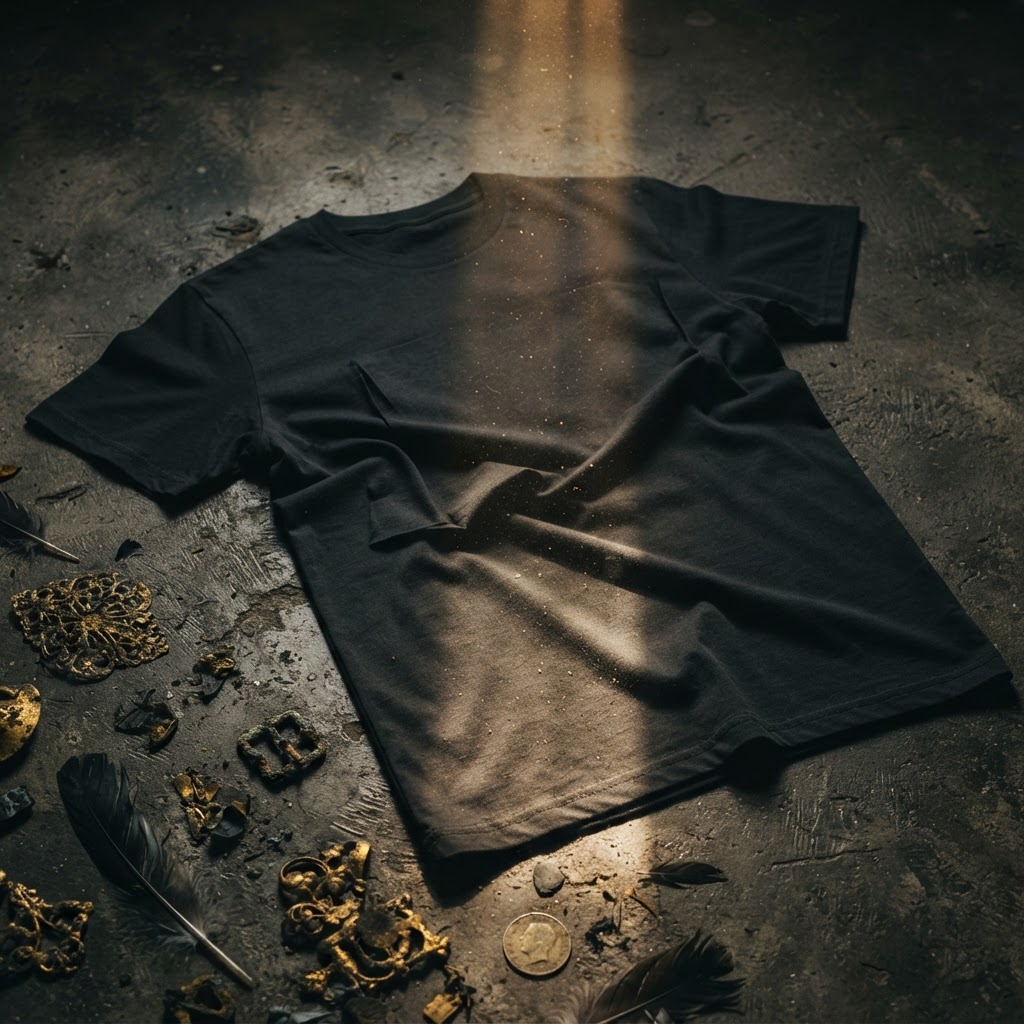
There are graphic tees that reference culture, and there are graphic tees that *are* culture — compressed, wearable, immediate. The Anubis Warrior sits firmly in the second category. It doesn't nod at mythology. It inhabits it.
Anubis is one of the oldest deities in the human record. The jackal-headed god of the dead, of embalming, of the passage between living and whatever comes after. He presided over the weighing of souls — a cosmic judiciary that made no concessions and accepted no argument. That's a heavy concept to carry on a t-shirt. But then again, the best graphic tees have always been in the business of carrying things that are too large for small talk.
This design doesn't soften that. It doesn't make Anubis cute, or ironic, or digestible. The Anubis Warrior is rendered with the seriousness the subject demands — and that decision alone tells you something about how T49 approaches a graphic.
The Source Material: Why Anubis Works
Anubis appears in Egyptian iconography as early as the First Dynasty — roughly 3100 BCE. That's a long run. Most cultural icons don't survive a decade of trend cycles; this one has survived five thousand years of civilisational collapse, religious upheaval, and the entire internet. There's a reason for that permanence.
The visual language of Anubis is almost impossibly strong. The jackal head — sharp-eared, angular, alert — sitting atop a human body creates a figure that reads as both familiar and deeply alien. It belongs to two worlds simultaneously, which is precisely what made it theologically potent in ancient Egypt and what makes it visually potent now. Hybrid figures carry a tension that purely human or purely animal forms can't replicate. Your eye doesn't know quite where to settle. That unease is the point.
As a warrior figure specifically, Anubis takes on an additional layer. This isn't the ceremonial priest-god measuring hearts against feathers. This is the guardian in full readiness — the force that stands between order and dissolution. The protector at the threshold. That's a concept with a gravity that transcends any single culture or era.
The Design Language: How It's Built
What distinguishes the Anubis Warrior as a graphic is the commitment to visual weight. Egyptian iconography has been borrowed, diluted, and misappropriated by fashion at various points — usually in ways that strip it of its authority, reducing millennia of symbolic precision to surface decoration. This design refuses that path.
The rendering maintains the formal qualities that make Egyptian imagery so structurally compelling: the strong silhouette, the deliberate posture, the sense that every element of the figure means something. Ancient Egyptian art wasn't decorative in the casual sense — it was a visual language with grammar and intent. The Anubis Warrior graphic honours that grammar without becoming an archaeology textbook.
There's also the question of scale and placement on the garment. A figure with this much presence needs room. Crowded onto a chest pocket it would collapse. Given space to exist, it commands. The design understands that a graphic tee is architecture as much as it is illustration — the fabric is the ground, and the image is the structure built upon it.
Cotton as the Right Medium
Print on cotton isn't an obvious home for ancient Egyptian iconography, and that productive tension is part of what makes this work. There's something interesting about a figure associated with eternity and cosmic judgment existing on a material that wears, fades, and lives alongside you.
Cotton is intimate. It picks up the texture of your days. A heavy graphic on a well-worn tee develops a relationship with the garment over time — the image becomes part of the fabric's history rather than just sitting on its surface. Anubis, a deity specifically concerned with the transition of souls, seems philosophically at home with that process. The design ages. It doesn't stay pristine. That feels right.
The weight of a quality cotton tee also matters to how figurative graphics read. Too light and the fabric distorts the image with movement; too stiff and it loses the ease that makes streetwear feel lived-in rather than costumed. The Anubis Warrior needs a ground that holds its form while still moving like clothing. That balance is where the design finds its wearability.
Street Culture and the Ancient World
Street culture has always had an appetite for imagery that carries genuine weight — imagery from traditions that understood power, transition, and the things that exist at the edges of ordinary life. That's why religious iconography, occult symbolism, and mythological figures have circulated through underground fashion since its earliest iterations. It's not appropriation for its own sake; it's recognition that some visual traditions developed a visual vocabulary so precise and so charged that it retains its force regardless of context.
Anubis specifically has had a sustained presence in subcultures that take the shadow side of existence seriously — from the tattoo community to the broader space where street culture intersects with the imagery of death, protection, and the unseen. The warrior aspect particularly resonates in traditions that see the graphic tee as a kind of armour, a declaration of what you're aligned with, what you carry.
This isn't aesthetic tourism. The Anubis Warrior design engages with that lineage deliberately. It's a graphic made for people who know what they're looking at — and it rewards that knowledge.
Wearing It: What This Tee Asks of You
Some graphic tees are passive. You put them on, they provide colour, pattern, a bit of texture. The Anubis Warrior is not a passive garment. A figure this loaded — historically, symbolically, visually — creates a centre of gravity in whatever you're wearing. Everything else orbits it.
That means the tee works best when the surrounding pieces are quiet. Heavyweight dark denim or straight-leg black trousers let the graphic exist without competition. An overshirt worn open becomes a frame rather than a distraction. Minimal footwear — clean leather, worn suede — keeps the visual weight anchored below without adding noise.
Unisex cut matters here too. Egyptian iconography isn't gendered in any contemporary sense — these are figures of cosmic function, not human social categories. The Anubis Warrior reads with equal authority across body types and styling approaches. Oversized and dropped on the shoulder with wide trousers it leans into the graphic's imposing scale. Tucked partially into high-waisted bottoms it becomes something stranger and more editorial. The design holds both readings without effort.
Why This One Lasts
The test of a serious graphic tee is whether it survives trend cycles — whether it means as much in three years as it does the day you first wear it. Designs built on genuine cultural depth tend to pass that test. Designs built on trend adjacency don't.
Anubis has been visually significant for five thousand years. The warrior archetype — the threshold guardian, the force that stands between the known and the unknown — is among the most enduring figures in human symbolic thought. A design that draws on those sources with real visual intelligence isn't in conversation with this season. It's in conversation with something much longer.
That's what T49 is interested in. Not what's trending, but what endures. Not what gets attention now, but what keeps asking questions the longer you look at it. The Anubis Warrior is that kind of graphic — the kind you don't get tired of, because there's always more in it than you've found yet.
From the Collection
The Anubis Warrior Unisex t-shirt is available now at T49 — [view it here](/product/453546647).
Explore the drop →