Blood, Sand & Ink: How the Gladiator Became Streetwear's Most Loaded Icon
There's a reason the gladiator never left. Not really. You've seen the imagery plastered across gallery walls, tattooed across forearms, screenprinted on bootleg cuts pulled from market stalls in cities that never sleep. The warrior archetype isn't nostalgic — it's permanent. It belongs to the visual DNA of street culture in the same way that samurai graphics, Aztec iconography, and ancient mythology have always belonged there: borrowed, reimagined, and worn like armour.
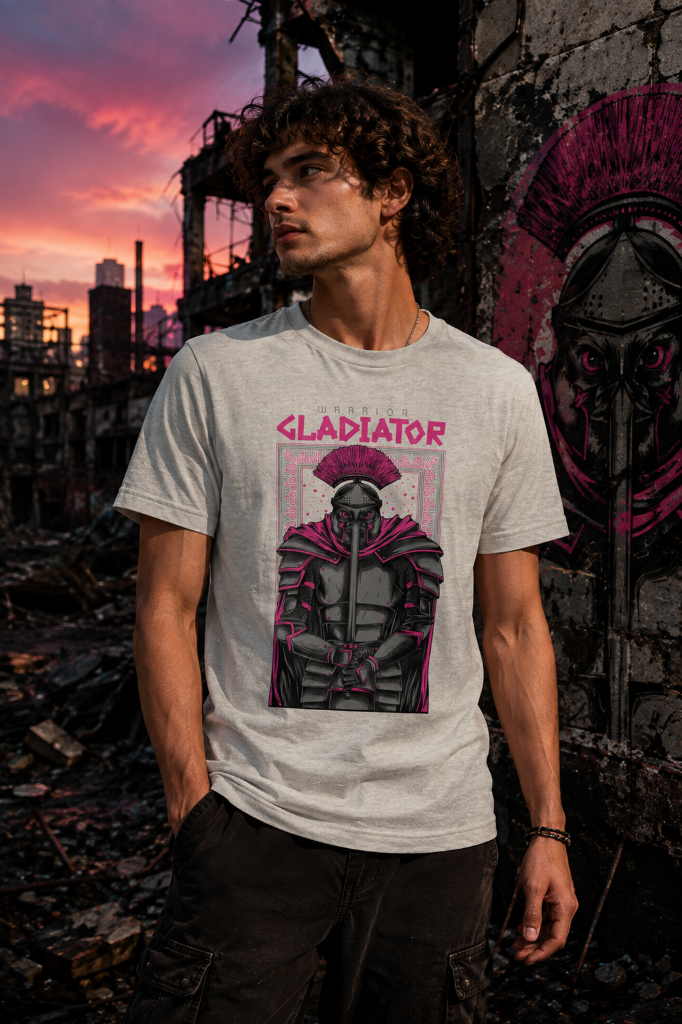
T49's latest drop, the Gladiator Warrior Tee, doesn't arrive quietly. It arrives the way good graphic work always does — with weight behind it. Not the weight of a marketing campaign, but the weight of a reference that actually means something.
This isn't a history lesson. It's a design conversation.
The Graphic Lineage Behind the Design
To understand why gladiator imagery hits different on a Tee, you have to think about what the figure represents in visual culture. The gladiator isn't just a soldier — it's a symbol of duality. Strength and vulnerability. Fame and disposability. The crowd-pleaser who had no crowd on his side.
That tension is exactly what makes it fertile ground for graphic artists. The best streetwear graphics have always lived in that space between power and precarity — think of the way 90s American designers used Native American imagery as a critique of conquest, or how Japanese brands built entire aesthetic languages around the ronin, the masterless samurai. The lone warrior, stripped of institution, operating purely on skill and nerve. That's the archetype.
The Gladiator Warrior graphic on this tee draws from that same visual lineage — the heavily detailed illustrative style that owes as much to underground comics and tattoo flash art as it does to classical Roman iconography. There's a rawness to the linework that feels hand-rendered rather than digitally sterile. That matters. In an era where AI-generated art is flattening graphic culture, work that carries the grain of human craft stands apart.
Mythology Wearing a Modern Cut
Street culture has always had a complicated relationship with ancient mythology. It's not reverence — it's reclamation. When New York graf writers started painting gods and warriors on subway cars in the 1970s and 80s, they weren't classicists. They were young people using the most powerful visual symbols available to them to say: *I exist. I was here. I fought.*
The gladiator fits that tradition perfectly. Here was a figure who entered an arena with nothing but what he carried on his body and what he'd built in training. No dynasty. No inheritance. Just presence and preparation. That resonates in communities where identity is built from the ground up — where what you wear, how you carry yourself, and the art you associate with tells your story before you speak.
There's also something deeply cinematic about the gladiator as an image. From the Italian peplum films of the 1950s to the Ridley Scott blockbuster that lodged the silhouette back into popular consciousness, the warrior in the arena has been a recurring figure in the stories cultures tell about themselves when they're thinking about power, spectacle, and what it costs to survive in a system that wasn't built for you.
On a Tee — that most democratic of canvases — the gladiator becomes something personal rather than monumental. It's not a statue. It moves with you.
Construction and Wearability
The Gladiator Warrior tee is , which in 2025 is less a design choice than a design standard. The best graphic tees have always been worn across gender lines — oversized on some, fitted on others, tucked or cropped or layered depending on the wearer. sizing done well gives you that versatility without compromise, and T49's size range — running from S through to 4XL — reflects a genuine commitment to inclusivity that goes beyond lip service.
At £20, this is a piece that sits in that rare category of genuinely accessible design. Not cheap, in the sense that corners have been cut — but priced for the culture, not for a boutique markup. The fabric carries the graphic without distortion, which sounds like a baseline requirement but is surprisingly hard to get right. The weight of the tee gives it structure enough to hold its shape across washes, which is the real test of a graphic Tee's longevity. The print itself benefits from that weight — the detail in the warrior illustration reads clearly at distance and holds up close, where the linework reveals its complexity.
Layering is where this tee earns its keep in a wardrobe. Under an open overshirt, beneath a zip-up hoodie, or worn clean on its own in the warmer months — the graphic is strong enough to anchor an outfit rather than compete with it.
Why the Warrior Archetype Still Lands
Every few years, someone declares that graphic tees are over. And every few years, the culture proves that wrong. The reason is simple: graphics are the fastest, most direct way to communicate identity through clothing. You don't need to know the brand. You don't need to decode a logo. The image speaks immediately.
The warrior — and specifically the gladiator, with all of its loaded historical and cinematic baggage — is one of those images that communicates something universal. Resilience. Defiance. A refusal to be reduced to a footnote. In the context of contemporary street culture, where authenticity is the only real currency, wearing a graphic that carries genuine visual and historical weight is a different proposition entirely from wearing a logo.
T49's Gladiator Warrior tee earns its place in the collection not because it follows a trend, but because it taps into something older and more durable than trends allow for. It's a piece of wearable graphic culture — the kind that looks better the more worn-in it gets.
The Gladiator Warrior Tee is available now in the T49 collection, sizes S to 4XL.
From the Collection
The Gladiator Warrior Tee is available now in the T49 collection, sizes S to 4XL.
Explore the drop →