
The Slow Burn: How Graphic Tees Became the Language of Every Generation
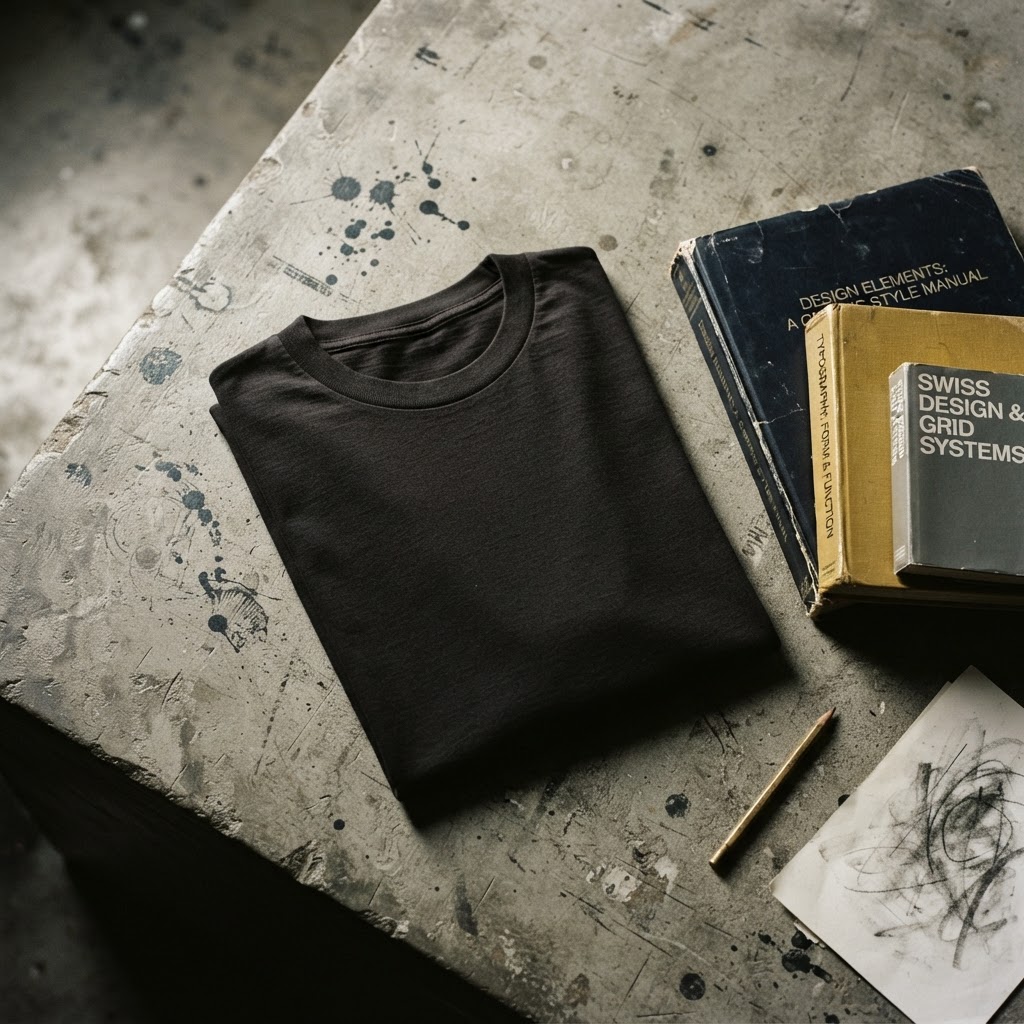
There is a moment in every cultural shift when something stops belonging to the people who built it. Sometimes that's a tragedy. Sometimes it's just the nature of things — ideas want to travel, images want to be seen, and a good piece of design has never been very good at staying put.
The graphic tee is perhaps the clearest example of this tension in modern fashion. Born from necessity, adopted by subcultures, co-opted by commerce, then reclaimed again — it has cycled through more cultural identities than almost any other garment. And yet somehow, through all of it, the best graphic tees have retained something genuine. The question worth asking isn't simply how they went mainstream. It's what survived the journey.
To understand that, you have to go back to the beginning — or at least to the moments that shaped the object as we now know it.
Cotton, Ink, and the Underground Economy
The printed t-shirt as a cultural object has its roots less in fashion and more in function. Through the mid-twentieth century, the plain white tee was workwear — underwear made outerwear by practicality rather than intent. When graphics started appearing on them in the late 1950s and through the 1960s, they were largely promotional: tourist destinations, campaign slogans, brand mascots. The t-shirt as billboard.
But running parallel to that commercial pipeline was something more interesting. Screen printing had become cheap and accessible enough that small operators — record stores, zine makers, local artists, protest organisers — could produce short runs with genuine creative intent. The result was an underground economy of printed cotton that operated almost entirely outside mainstream fashion. These were not garments designed to sell. They were designed to signal — allegiance, belief, aesthetic position.
The distinction matters because it created a set of values around graphic tees that has never entirely disappeared: the idea that what's printed on a tee is a declaration, not a decoration.
How Subcultures Turned the Tee Into a Uniform
By the time punk arrived in the mid-1970s, the printed tee had already become the default canvas for subcultural expression. What punk did — particularly in London — was weaponise it. Ripped, slashed, hand-printed, safety-pinned. The graphic tee stopped being something you bought and started being something you made, or at least something that felt made rather than manufactured.
Hip-hop picked up that same DIY energy and ran with it in a different direction. Where punk used graphics to destroy and subvert, early hip-hop used them to build — crew identity, borough loyalty, artistic affiliation. The tee became infrastructure. It told you where someone was from, who they moved with, what they listened to. By the late 1980s, independent labels and artists were producing their own merchandise not as an afterthought but as a primary product. The graphic tee was already a business.
Skate culture in California ran a parallel track. Brands like Powell Peralta weren't just making boards — they were making visual identities so strong that the apparel became as culturally loaded as the hardware. A tee from the right brand in the late 1980s meant something specific. It wasn't just clothing. It was fluency in a visual language that most people outside the scene couldn't read.
The Moment the Industry Noticed
The mainstream didn't so much discover streetwear as it eventually stopped being able to ignore it. By the late 1990s and into the early 2000s, the cultural centres of gravity had shifted enough that designers and retailers who'd previously looked down at printed cotton were paying very close attention.
The rise of Japanese streetwear — Nigo, A Bathing Ape, the entire Ura-Harajuku ecosystem — was particularly significant. Here was an approach to graphic tees that was simultaneously deeply subcultural and impeccably considered as design. The graphics weren't slogans or protest. They were references, jokes, homages — entire conversations compressed into a single chest print. The aesthetic was playful but the intent was serious, and that combination caught the attention of a fashion industry that had been operating on much simpler terms.
When luxury houses started pulling from streetwear's vocabulary in the 2010s — dropping limited pieces, collaborating with graf artists and skate brands, building hype through scarcity rather than traditional retail — it felt like confirmation of something that had been obvious to anyone paying attention for years: graphic tees were no longer subculture's secret. They were the main event.
What Mainstreaming Actually Cost
The honest account of streetwear's journey into the mainstream has to include what was lost as well as what was gained. When a visual language built for insiders gets adopted wholesale by a mass market, the original signals get scrambled. A graphic that once communicated something specific — membership in a scene, knowledge of a reference, alignment with a set of values — becomes, at sufficient scale, just a pattern on a shirt.
This is the recurring anxiety in streetwear discourse, and it's not entirely misplaced. There have been genuine casualties: small brands absorbed or outcompeted, aesthetics stripped of context and resold without credit, subcultural histories flattened into trend reports. The commercialisation of graphic tee culture has not always been kind to the communities that built it.
But there's another way to read the same history. The democratisation of graphic design — better printing, accessible software, direct-to-consumer channels — has also made it possible for designers working outside major fashion centres to build real audiences for genuinely considered work. The tools that allowed the mainstream to absorb streetwear also gave independent designers more reach than any previous generation. The field got more crowded, but it also got more interesting.
Design as the Thing That Lasts
What separates the graphic tees that endure from those that don't has always been the same thing: the quality of the thinking behind the image. Not production quality in isolation, not brand name, not how well the hype was managed. The idea.
This is why certain tees from the late 1980s and early 1990s still feel alive today — the graphics were doing something beyond decoration. They were asking a question, making an argument, compressing a worldview into a single image. When the design is strong enough, it doesn't need context to function. A good graphic tee should be able to stop someone who knows nothing about its origins and make them feel the weight of it anyway.
This is the standard that serious graphic design has always held itself to, and it's the standard that the best work in streetwear — whether from established labels or independent designers — continues to reach for. Not novelty for its own sake. Not irony as a substitute for substance. An image that means something, rendered with enough skill and intent that the meaning survives contact with the world.
Where the Graphic Tee Sits Now
The current moment is genuinely plural. Graphic tees exist simultaneously in luxury boutiques and charity shops, in stadium crowds and gallery openings, worn by people with wildly different relationships to the history outlined above. That's either a sign of total co-optation or proof of remarkable cultural durability, depending on your disposition.
What seems clear is that the graphic tee has become something like a shared infrastructure — a garment format so embedded in how people dress and communicate that no single scene or institution owns it anymore. The interesting question now isn't whether it belongs to the mainstream or the underground. It's who's doing the most considered work within the format.
The answer to that question, as it always has been, is found by looking at the design itself. Not the logo. Not the price point. The image — what it's doing, what it's saying, what it demands from the person wearing it.
That standard hasn't changed since someone first stretched a screen over a wooden frame and pulled ink across cotton. Everything else has just been noise around it.
From the Collection
The Resurgence Unisex t-shirt is available now in the T49 collection — a design built around exactly the kind of considered graphic intent this piece is about. Find it at /product/454726913.
Explore the drop →