
From Underground to Everywhere: How Streetwear Lost Its Secret and Found Its Soul
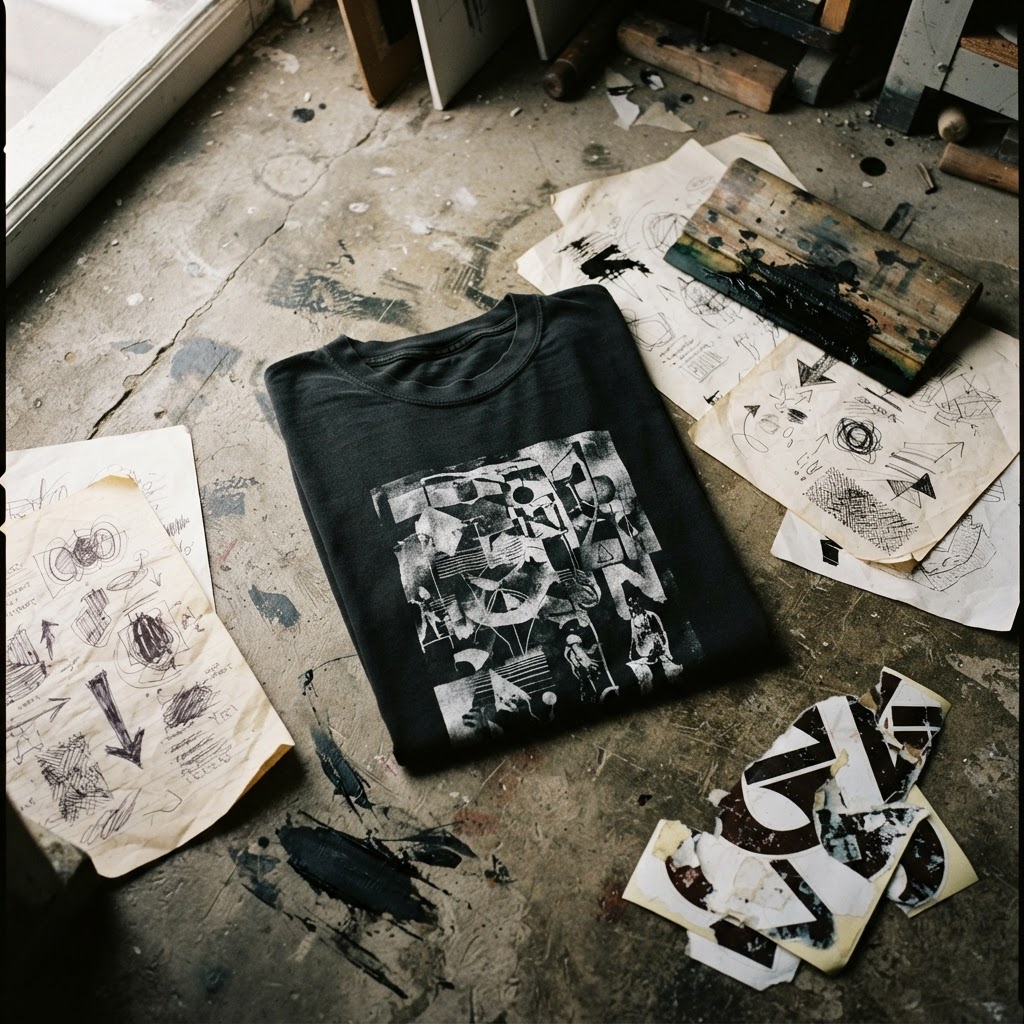
There's a specific moment in cultural history when something stops being a secret and becomes a phenomenon. For streetwear, that moment has been happening in slow motion for about four decades — a long, contested, occasionally ugly transition from the margins to the centre of global fashion. And depending on who you ask, that transition was either the greatest victory underground culture ever achieved, or the beginning of its slow death.
The truth, as ever, is more complicated. Streetwear didn't get absorbed by mainstream fashion — it colonised it. The hoodies, the graphic tees, the dropped shoulders and the heavy cotton weights that now fill every high street retailer in the world didn't trickle down from luxury houses. They moved up. They were dragged into boardrooms and runway shows by designers and culture-watchers who recognised that the most vital visual language of the last half-century was being made in garages, printed in small runs, and worn by kids who weren't waiting for anyone's permission.
This is the story of how that happened. And why the graphic tee sits at the absolute centre of all of it.
The Blank Canvas That Started Everything
The t-shirt itself is almost offensively democratic. It's a rectangle of fabric with holes for your limbs. For most of its early history, it was an undergarment — military-issue, functional, invisible. Then, somewhere in the postwar American cultural explosion, it became a surface. James Dean wore one. Marlon Brando wore one. And suddenly the white tee wasn't underwear anymore — it was attitude.
But the printed graphic tee as a cultural artefact came slightly later, born from two parallel worlds that shared more DNA than either fully admitted: surf and skate culture on the West Coast, and the DIY energy of punk and post-punk on both sides of the Atlantic. Both communities needed a cheap, immediate way to signal identity. Screen printing delivered that. You could run fifty shirts in a weekend, sell them at shows or out of the back of a van, and by Monday morning a graphic was in circulation.
What those early producers understood — instinctively, without theorising about it — was that a t-shirt isn't just clothing. It's a broadcast. It's the cheapest billboard in the world, and the most personal one. You don't walk past a t-shirt the way you walk past a poster. You carry it. It moves with you. It accumulates the smell and wear of your actual life.
Shawn Stussy and the Architecture of Cool
If there's a single figure who bridges the gap between informal subculture and what we'd now recognise as the streetwear industry, it's Shawn Stussy. His signature — a loose, graffiti-influenced scrawl originally used on surfboards — migrated onto printed shorts and tees in the early 1980s. The genius wasn't the logo itself. It was the distribution strategy: seed the product in specific cities, specific shops, specific hands. Make it feel like discovery. Make it feel earned.
That logic — scarcity plus community plus authentic visual identity — became the foundational grammar of streetwear as a business. Supreme perfected it. A Bathing Ape weaponised it in Tokyo. But the underlying principle traced directly back to that surfboard signature: the right image, in the right hands, carries more weight than any advertising campaign.
The graphic tee was the perfect vehicle for this because it required almost nothing to produce and everything to conceive. The barrier wasn't manufacturing. It was ideas. Could you make something visually arresting enough that someone would want to wear it, be seen in it, be associated with it? That question is still the only one that matters.
Hip-Hop Rewrites the Rules
If skate and surf culture established the infrastructure of streetwear, hip-hop blew the walls out. By the late 1980s and through the 1990s, rap music was generating its own visual ecosystem at a speed that the fashion industry genuinely couldn't track. Dapper Dan in Harlem was reworking luxury logos into entirely new garments years before those luxury houses had any idea how to address a Black urban customer. When they eventually tried to shut him down, they inadvertently documented how completely the cultural energy had shifted.
The brands that emerged from this period — Fubu, Karl Kani, Cross Colours — weren't making streetwear as a subculture experiment. They were building businesses that reflected the actual lives, aesthetics, and politics of their communities. The graphic tee in this context became genuinely charged. It carried flags, faces, messages. It was memorial and protest and celebration simultaneously.
This is the period when the graphic tee stopped being primarily decorative and became fully ideological. What you wore on your chest announced allegiance, knowledge, mourning, resistance. The image wasn't just design — it was argument.
The Luxury Collision and What It Cost
The mainstream fashion industry spent most of the 1990s either ignoring streetwear or dismissing it. Then, in the 2000s, it started paying attention — and eventually started buying. Collaborations multiplied. Supreme did Louis Vuitton. Off-White put quotation marks on everything and called it deconstructed luxury. Virgil Abloh walked into Louis Vuitton's menswear creative directorship.
The response from streetwear's older guard was mixed. Some saw it as validation — proof that the visual language they'd developed in relative obscurity had real cultural power. Others saw it as extraction: the aesthetic lifted from its context, repriced for a different customer, stripped of the community knowledge that originally gave it meaning.
Both readings are correct. That's what makes this moment so genuinely interesting rather than simply triumphant or tragic. The mainstream didn't understand streetwear well enough to fully absorb it. The codes remained, even when the prices changed. A Supreme box logo on a tee means something different when it costs four hundred pounds resale than when it was twelve at the drop. But it still means something. The graphic still carries information that a plain garment never could.
What Authenticity Actually Means Now
The word 'authentic' has been so thoroughly misused by marketing that it's nearly unusable. But there's a real idea underneath the wreckage of the word, and it matters enormously to how graphic tees function in 2024.
Authenticity, in the context of streetwear graphics, was never really about who made something or how it was distributed. It was about whether the image had genuine conviction behind it. Whether the person who designed it actually cared about the visual problem they were solving. Whether there was a real idea — a real point of view — embedded in the print.
This is why the most compelling graphic tees have always come from outside the mainstream fashion system, even when they eventually entered it. The underground produces images under pressure — pressure of limited resources, limited audience, the necessity of genuine communication rather than broad appeal. That pressure makes better design. It forces decisions. It eliminates the safe middle option.
Independent labels operating outside the trend cycle still work this way. The graphic is the thing. Not the marketing around it. Not the price point. Not the collaboration announcement. The image itself has to be worth wearing — worth being seen in, worth carrying through the world as part of your own visual identity.
Designs like the Skull Kids Tee exist in this tradition: imagery with genuine conceptual weight, made for people who read images rather than just wear them.
Where the Culture Goes From Here
Street culture has always regenerated through contrast. When one aesthetic becomes fully mainstream, the counter-move appears almost immediately — harder, stranger, more niche, more demanding of its audience. The cycles are getting faster but the mechanism is the same.
What's interesting about the current moment is that the tools for independent production and distribution have never been more accessible, while the noise level has also never been higher. Getting a tee designed and made is easier than it's ever been. Getting the right person to notice it is harder. Which means the image has to work harder. The graphic has to carry more weight.
This is, in a strange way, a return to the original conditions that made streetwear interesting in the first place. The gatekeepers are gone, or at least weakened. The audience is fragmented and self-selecting. The communities that cohere around specific visual languages are smaller and more committed. A tee that means nothing to most people might mean everything to the right few hundred.
That's not a problem. That's the point. Streetwear was always about density of meaning over breadth of appeal. It moved mainstream not by diluting itself but by proving, repeatedly, that images with real conviction eventually find their audience — however long it takes, whatever route they travel to get there.
From the Collection
The Skull Kids Tee is available now in the T49 collection — /product/455156557
Explore the drop →