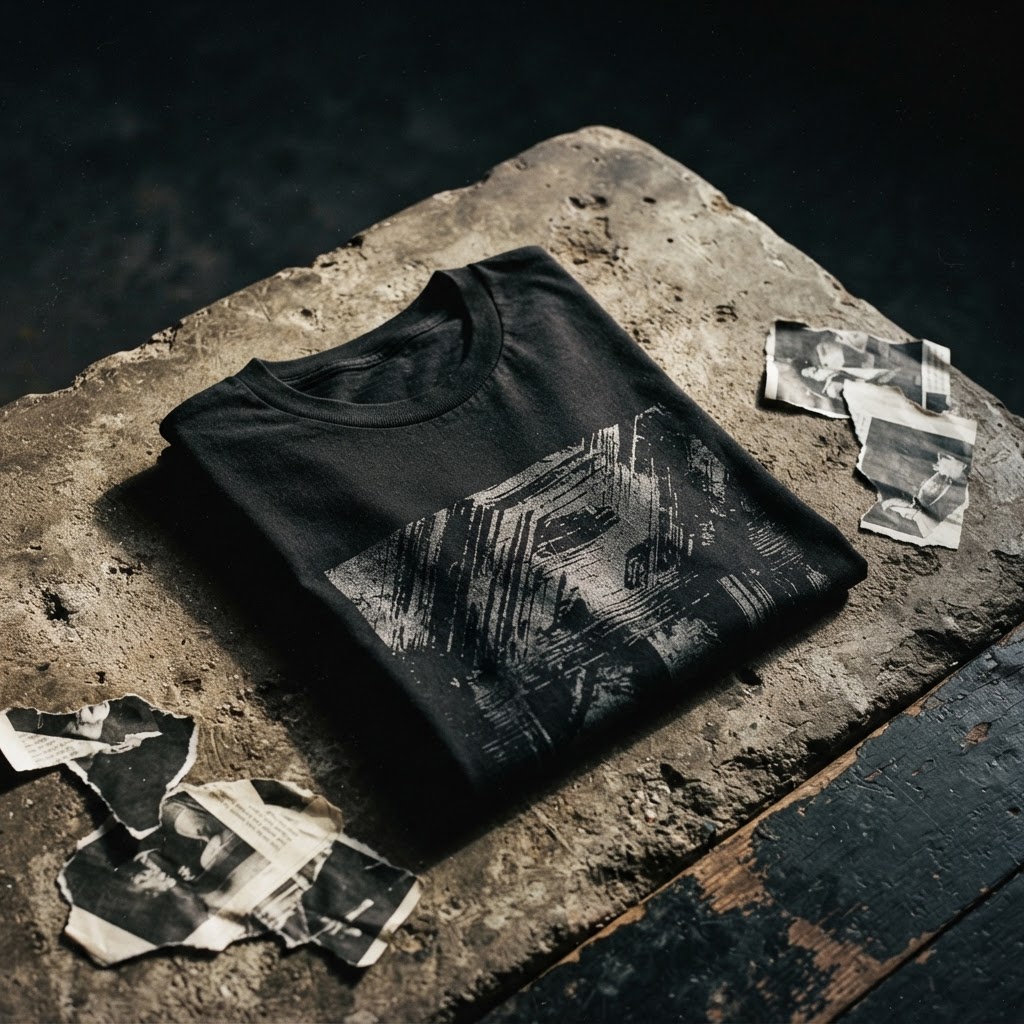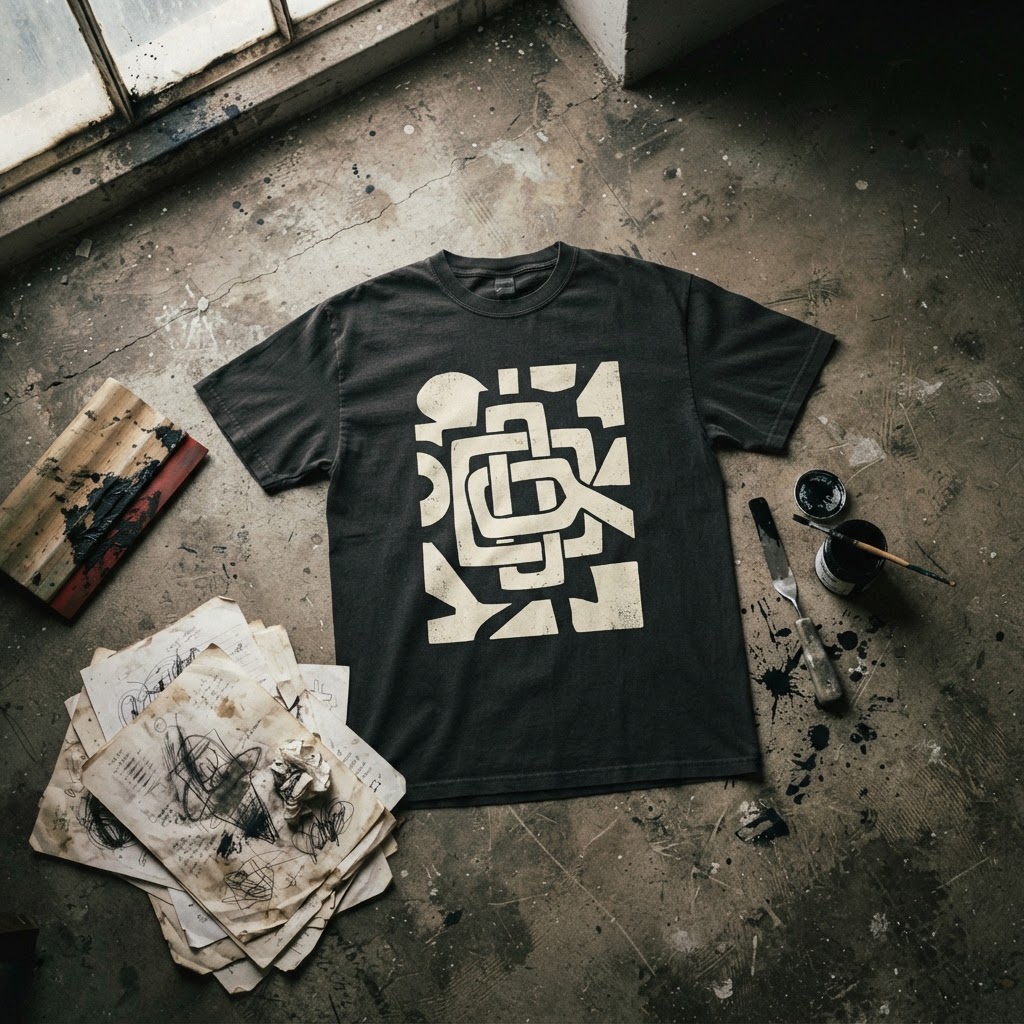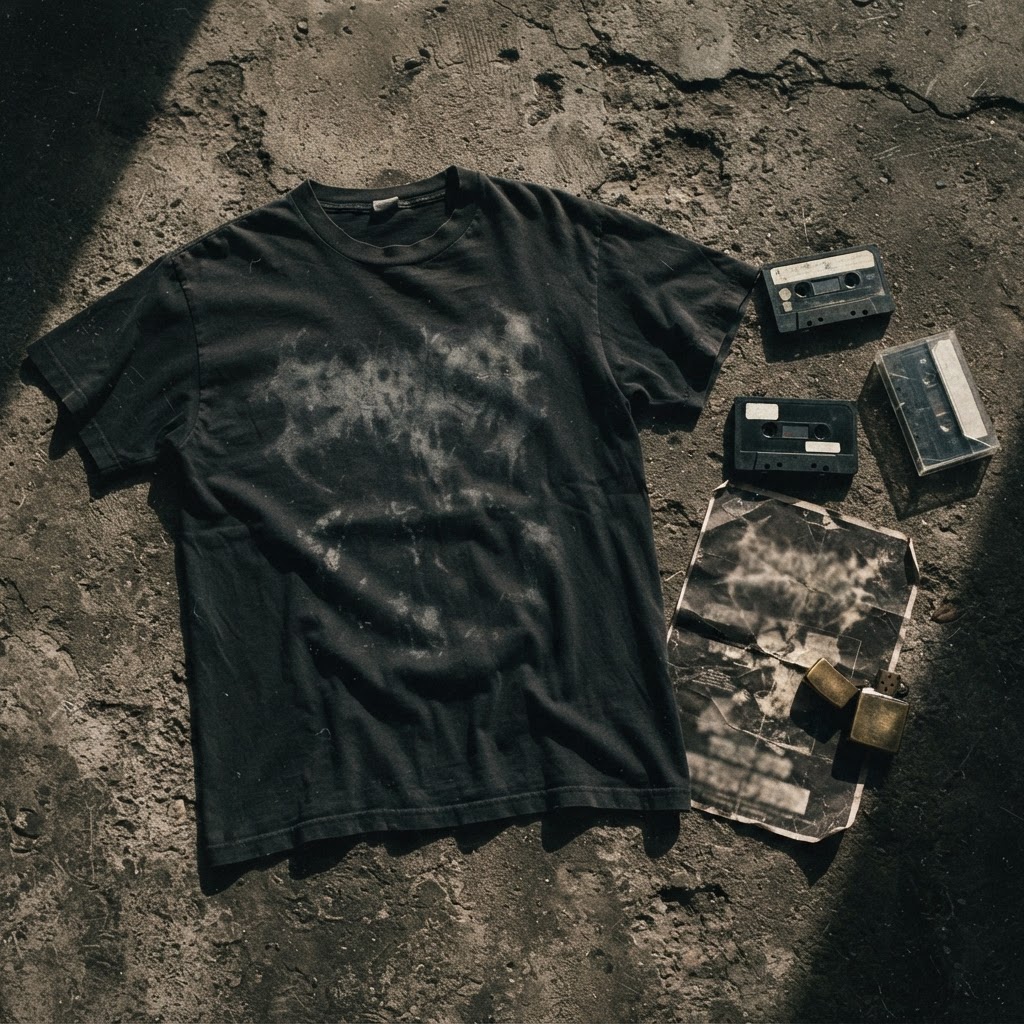
Band Tees Are the Original Streetwear — And They Never Stopped Being Relevant
Are band tees considered streetwear?
There's a moment most people recognise. You're in a crowd, a coffee shop, a train carriage, and someone's wearing a faded tee — maybe a tour date on the back, a hand-drawn logo on the chest — and something shifts. You either know it or you don't. That recognition, or the deliberate absence of it, is the entire architecture of streetwear. And it didn't start with a Supreme box logo or a Virgil Abloh installation. It started with a band you either loved or hadn't heard of yet.
The band tee is the original streetwear piece. Not in a nostalgic, let's-romanticise-the-past way. In a structural, this-is-genuinely-where-it-came-from way. Everything the broader streetwear conversation now treats as sophisticated — limited drops, subcultural signalling, the rejection of mainstream taste, design as ideology — was already present in the band tee decades before the word streetwear existed.
To understand where graphic tees are going, you have to understand where the band tee has always been.
The Shirt As Scene Membership
In the early days of touring culture — late sixties, through the seventies and into the punk and metal explosions of the eighties — the band tee served a specific social function. It wasn't merchandise in the commercial sense we understand now. It was a receipt. Proof of presence. You were there, you heard it, you felt it. The shirt was the physical object that carried that experience back into the world.
But it did something else too. It identified you to others who shared the same reference. This is exactly what streetwear has always been about — the visible signal that tells the right people you belong without having to announce it. The band tee was doing this long before skate brands, long before hip-hop started putting logos on everything, long before luxury fashion decided it wanted a piece of the street.
Punk in particular understood this with almost violent clarity. A hand-stencilled Crass tee or a roughly printed Discharge shirt wasn't just merch — it was a flag. It said something about your politics, your taste, your willingness to exist outside of whatever the mainstream was offering. The design itself carried that weight. Rough, confrontational, often barely legible. That was the point.
Design That Meant Something Before 'Design' Was the Conversation
What's often overlooked in the history of band tees is how much genuine design thinking went into them — particularly at the edges of the mainstream, where budget constraints forced creativity. The imagery that defined metal, punk, goth, and hardcore wasn't arbitrary. It was a visual language built to communicate something specific to a specific audience.
Iron Maiden's Eddie. The Rolling Stones' tongue. The Misfits' skull. These aren't just logos — they're complete design systems that have outlasted almost every corporate branding exercise of the same era. They work at small scale and large scale. They reproduce on black cotton and white cotton. They reference art history, horror, mythology, and rebellion simultaneously. Any serious graphic designer looking at them has to admit: that's good work.
The best band tees operated the way the best streetwear graphics do now — with a referential depth that rewards the person who gets it and remains compelling to the person who doesn't. A great graphic on a tee shouldn't need context to work visually. But it should reward context if you have it.
This is the standard that the strongest independent t-shirt design operates by today. Not surface-level cool, but imagery with actual roots — in mythology, in folk art, in historical iconography, in the kind of visual storytelling that feels earned rather than assembled.
How Hip-Hop Picked Up the Thread
By the late eighties and into the nineties, hip-hop culture had absorbed the band tee's logic and rebuilt it with its own vocabulary. The oversized tee became a canvas. Brands like FUBU, Karl Kani, and later Rocawear weren't just selling clothes — they were creating flags of their own. The design philosophy was the same as the band tee: visible identity, subcultural belonging, a deliberate distance from whatever the mainstream was wearing.
Then came the skateboarding crossover, the downtown New York influence, the Tokyo street scene feeding back into American and European fashion, and suddenly you had a whole ecosystem that everyone started calling streetwear. But the blueprint had been drawn much earlier, in the back of a van between venues, by a band selling shirts out of a cardboard box.
The band tee's DNA is in all of it. The idea that a graphic on a shirt can carry ideology. That limited availability creates desire. That authenticity — real or performed — is the currency. That dressing outside mainstream taste is a form of self-definition. These weren't invented by streetwear. They were inherited.
The Cowboy, The Warrior, and Why Mythology Still Works
One thread that runs from the earliest band tees all the way through to the strongest graphic tee designs today is an interest in mythology and archetype. The Misfits weren't drawing horror imagery by accident. Metal bands didn't obsess over Norse and medieval iconography because it was trendy. These images tap into something deeper — the human interest in figures who exist outside ordinary moral frameworks. Heroes and outlaws. Warriors and wanderers.
The cowboy is one of the most enduring of these archetypes. Not the Hollywood version — the mythological one. Someone operating at the edge of civilisation, by their own code. When that archetype gets filtered through a streetwear lens and merged with warrior iconography, you get something that sits in the same tradition as those great band tee designs: imagery with weight, with history, with a visual confidence that doesn't need explanation.
This is exactly the kind of design thinking that separates a genuinely interesting graphic tee from a shirt that just happens to have something printed on it.
Why the Band Tee Revival Isn't Just Nostalgia
There's been a lot of commentary about the band tee's return — vintage Metallica tees selling for triple figures, every fast fashion brand producing knockoff rock imagery, celebrities photographed in faded tour shirts they may or may not have context for. Most of that commentary frames it as nostalgia or appropriation. Some of it is. But there's something else happening too.
The band tee's return reflects a genuine cultural appetite for graphic clothing that means something. Not ironic meaning, not algorithmic meaning — actual referential, historically grounded meaning. People are tired of wearing logos that belong to corporations. The band tee, at its best, belongs to a community. It points outward, toward music, toward art, toward a subculture with real values and real history.
The best independent graphic tee design operates in this same space. Not trying to replicate the band tee aesthetic — that's already been done to death — but working from the same underlying logic. Design with roots. Imagery that rewards attention. A garment that tells you something true about the person wearing it.
What the Band Tee Teaches Modern Streetwear
If there's a lesson the band tee offers to contemporary graphic tee culture, it's this: longevity comes from authenticity of concept, not from trend alignment. The tees that have lasted — that people are hunting down in vintage shops and paying real money for — aren't the ones that chased what was popular at the time. They're the ones that committed fully to a vision, however rough, however niche.
The Discharge tee didn't care if you thought it was ugly. The early Slayer shirts weren't designed to be broadly appealing. They were designed for a specific person with a specific taste, and that precision is exactly why they've outlasted a thousand more commercially calculated designs.
This is the standard worth holding onto. In a market flooded with generic graphics and trend-hopping prints, the most interesting work is still being done by designers who think the way those early band tee artists thought — with conviction, with cultural knowledge, with a genuine point of view about what belongs on a shirt and what doesn't.
The band tee didn't just inspire streetwear. It wrote the rulebook. Everything else has been commentary.
The Cowboy Warrior Unisex t-shirt works in this same tradition — archetypal imagery with genuine visual weight. Available now at T49: /product/453555553 EXPLORE THE COLLECTION →