The Graphic Tee Didn't Just Carry Culture — It Became It
How did graphic tees become a form of cultural expression?
There's a moment in the history of dress where the body stops being just a body and becomes a billboard. Not for brands or corporations — for ideas. For belonging. For rage, for joy, for movements that hadn't yet found a name. That moment arrived, arguably, in the mid-twentieth century, and its vehicle was the most humble object in anyone's wardrobe: a cotton t-shirt with something printed on the front.
The graphic tee is easy to underestimate. It's casual. It's cheap to produce. It sits beneath jackets, gets worn to death, and ends up in charity shops or ripped up for dust cloths. But strip back the disposability and you find something more durable than the fabric itself — a format that has carried countercultural energy, political messaging, artistic vision, and community identity across decades without ever really losing its power.
What makes it work? And why, in an era of digital communication where anyone can broadcast anything to anyone, does a piece of printed cotton still carry such weight?
Before It Was Fashion, It Was Function
The t-shirt's origins are resolutely unglamorous. Issued as US Navy undergarments in the early 1900s, it was functional, anonymous, disposable. By the mid-century it had migrated to civilian life as workwear — the garment you wore under your real clothes, or when your real clothes needed protecting. Marlon Brando changed the conversation in A Streetcar Named Desire (1951), putting the plain white tee on screen as an object of physicality and rebellious nonchalance. James Dean did the same. Suddenly the undergarment was the garment.
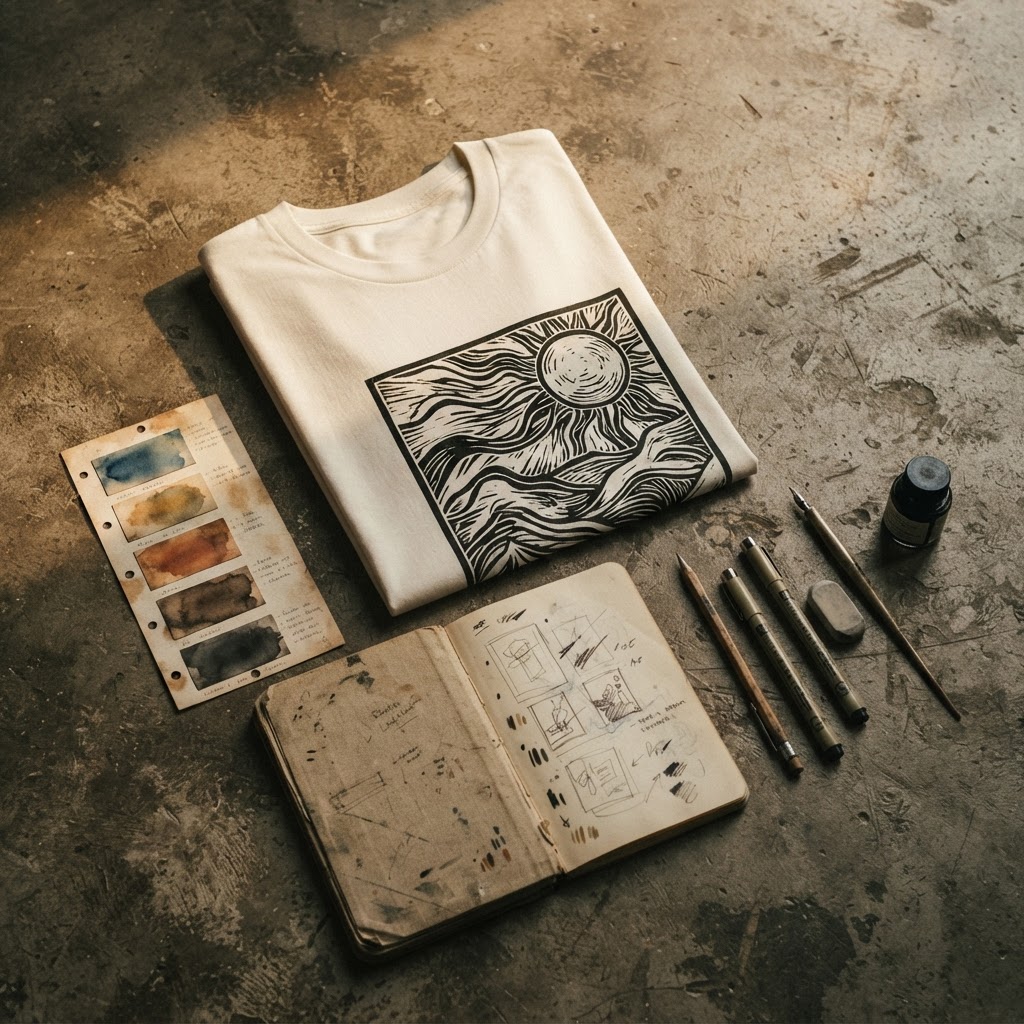
But plain was only the beginning. The technical leap that made the graphic tee possible was plastisol screen printing, which became commercially accessible in the 1960s. Now you could put an image — any image — on a shirt, in quantity, at relatively low cost. The implications were immediate. You could print a band name, a slogan, a face, a flag. You could make ten of them or ten thousand. The t-shirt became a medium.
The Sixties and Seventies: When the Tee Got Political
The first real wave of graphic tee culture was ideological. The counterculture movements of the late 1960s understood immediately that clothing was communication — that what you wore in public was a form of speech. Political slogans, peace symbols, psychedelic artwork: all of it moved onto cotton and into the street. Wearing a tee became a way of signalling allegiance, of making your position visible without saying a word.
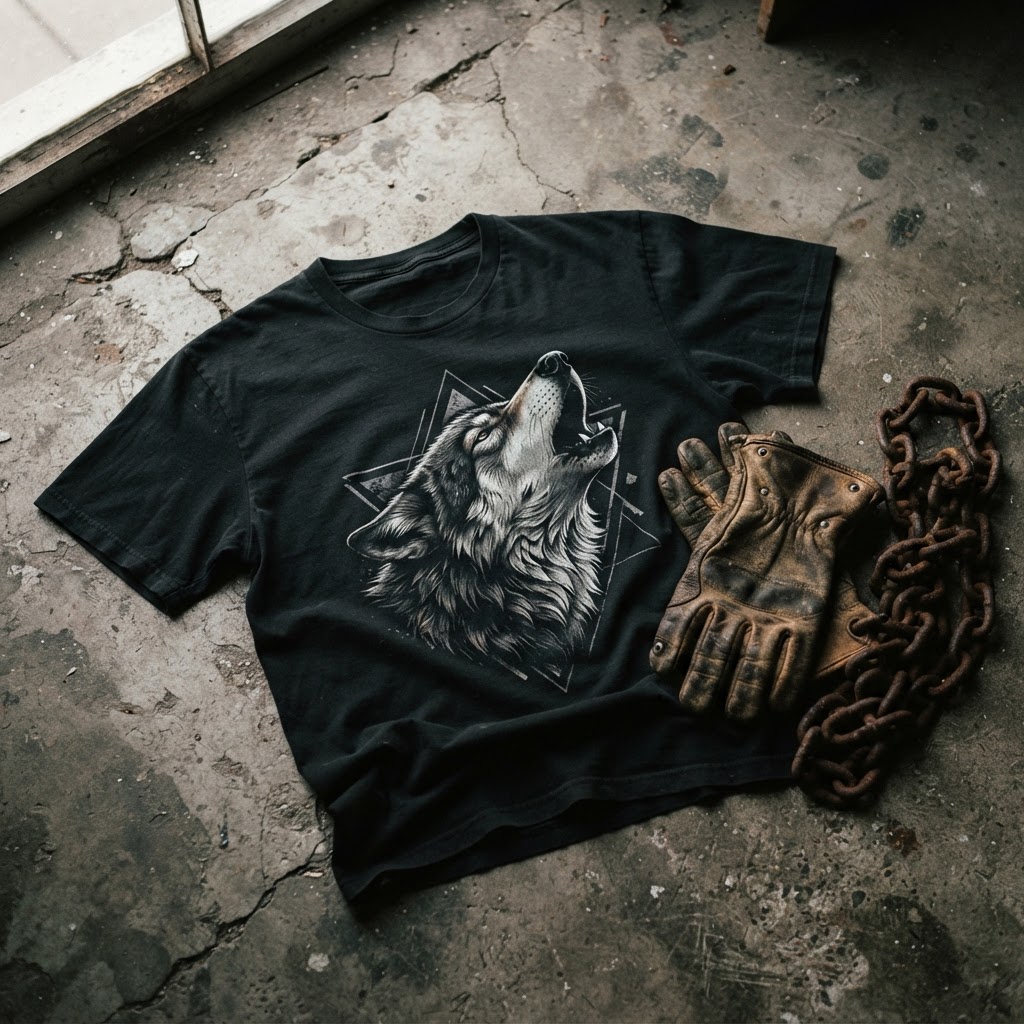
Rock and roll accelerated everything. Band tees from the 1970s — the Rolling Stones tongue, the Ramones presidential crest, Led Zeppelin's imagery drawn from esoteric symbolism — were among the first graphic tees to achieve genuine iconic status. They weren't merchandise in the cynical sense; they were totemic objects, ways of declaring cultural affiliation to other people who understood the reference. The graphic tee was functioning as a subculture ID card.
Worth noting is that the best of these early designs weren't accidental. The Ramones tee, designed in 1976, borrowed deliberately from presidential campaign iconography to create something that felt both earnest and absurdist. These were designed objects, and the people making them understood visual language.
The Eighties: Art, Commerce, and the Street Collide
If the seventies politicised the graphic tee, the eighties aestheticised it. The explosion of street art and graffiti culture in New York brought a new visual vocabulary — bold line work, vivid colour, characters and letterforms pulled from urban surfaces — directly into fashion. Artists like Keith Haring and Jean-Michel Basquiat blurred the boundary between fine art and the street, and their visual signatures ended up on clothing almost immediately.
At the same time, the rise of hip-hop created an entirely new relationship between music, identity, and dress. Where rock had its band tees, hip-hop built something more complex: a relationship with fashion brands that was simultaneously aspirational and subversive. Taking luxury brands and wearing them on your own terms, in your own context, was itself a statement. The graphic tee sat at the centre of this — cheap enough to be democratic, visible enough to carry meaning.
By the late eighties, designers like Katharine Hamnett were using oversized tees with massive typographic slogans as genuine political interventions. When Hamnett wore a "58% Don't Want Pershing" tee to meet Margaret Thatcher in 1984, the graphic tee had arrived as a serious instrument of public discourse. Cotton as op-ed.
The Nineties and the Rise of the Graphic as Identity
The 1990s were the decade when the graphic tee became fully embedded in the architecture of youth identity. Skateboarding, snowboarding, and the broader action sports world created brands — Santa Cruz, Powell Peralta, Stüssy — that understood graphic design as their primary language. The imagery was urgent and irreverent: skulls, cartoon characters, abstract marks, sun-bleached retro aesthetics. The graphics weren't decorations; they were the brand.
Japan absorbed and transformed all of this during the same period. Tokyo's Harajuku district became a laboratory for graphic tee culture, with designers like NIGO and Hiroshi Fujiwara synthesising American street references with Japanese precision and obsessive quality. BAPE's camouflage, Undercover's fractured graphics, the entire Ura-Harajuku scene — all of it was rooted in what could be done with a tee and a strong image. Japan took the format seriously as design, and the results still influence what's being made today.
Across both continents, what the best nineties graphic tees shared was a sense of authorship. Someone made a decision about what image mattered, what visual world it belonged to, what it would feel like to wear it. That intentionality is what separated the memorable designs from the forgettable ones.
What the Graphic Tee Communicates Now
Digital culture changed the graphic tee without diminishing it. If anything, oversaturation — millions of mediocre printed tees flooding every market — made genuine design more visible by contrast. When everything is printed, the quality of the thinking behind a print becomes the differentiator.
The graphic tees that cut through today are the ones that do what the best always did: they translate an idea, a mood, a cultural reference into a single image with enough density to reward attention. They're not decorative. They have a point of view. They come from somewhere.
Design culture and streetwear have never been more intertwined. The conversation around fonts, illustration, colour theory, and visual composition that used to happen in studios and design schools now happens publicly, on social platforms, in real time. People who wear graphic tees increasingly know something about why a design works — they have visual literacy that previous generations didn't. That raises the bar.
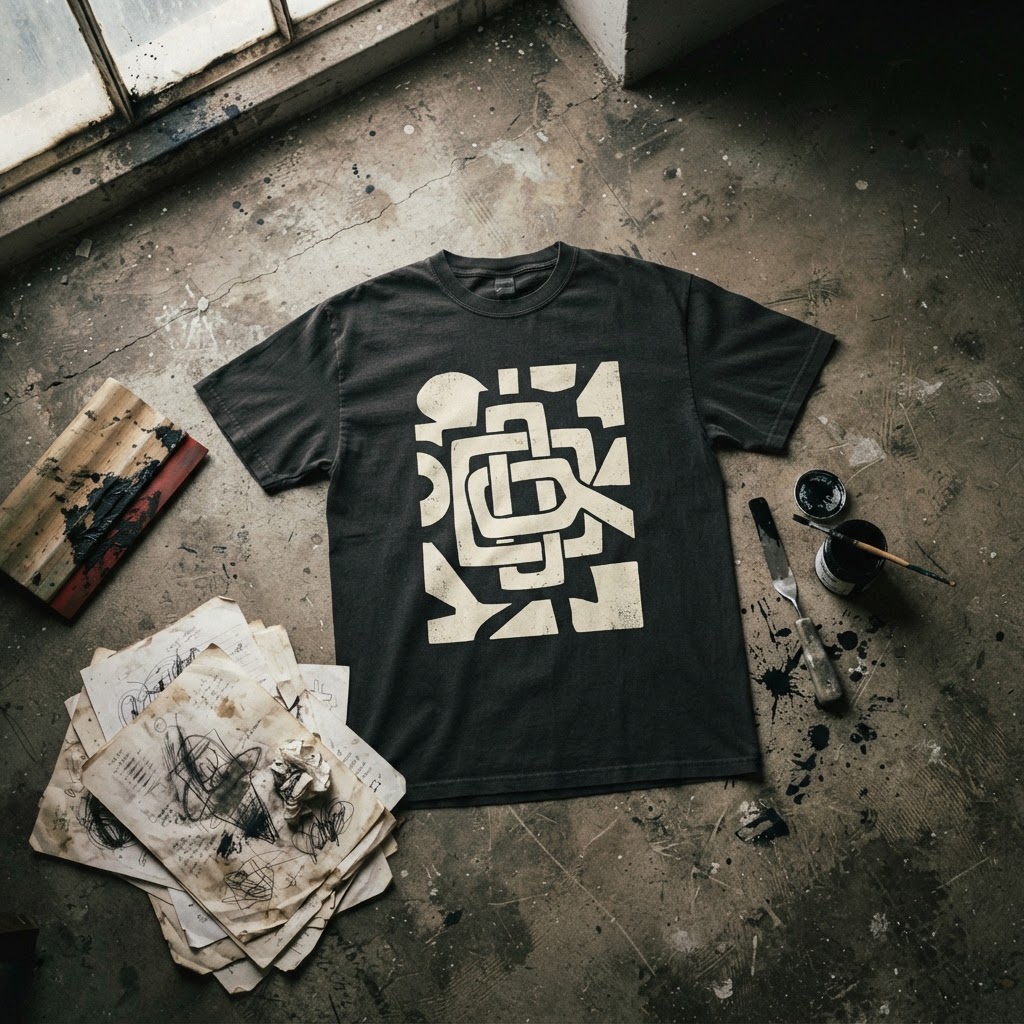
The most interesting graphic tees being made right now tend to sit at intersections: between fine art and commercial design, between nostalgia and now, between the handmade and the produced. They carry references that aren't spoon-fed. The Born Race design is a case in point — built around the idea of identity stripped back to its most essential, the kind of concept that doesn't announce itself loudly but gets more interesting the longer you look at it.
The Tee as Time Capsule
One final thing worth saying: graphic tees are archives. The tees people keep — the ones they don't throw away, the ones that survive move after move and end up folded at the back of a drawer — are the ones that meant something. Not just because of what they look like, but because of what they mark. A moment in a subculture. A period in your own life. A design that said something you wanted to say.
Museums collect them now. Auction houses sell vintage band tees for thousands. What was disposable has become historical document. That's not ironic — it's entirely logical. The graphic tee was always doing cultural work. We're just finally taking it seriously as the format it is: one of the most democratic, durable, and expressive communication tools the twentieth century produced.
The canvas is still cotton. The conversation hasn't stopped.
The Born Race Unisex t-shirt — a design about identity at its most fundamental — is available now at T49: /product/453554569 EXPLORE THE COLLECTION →