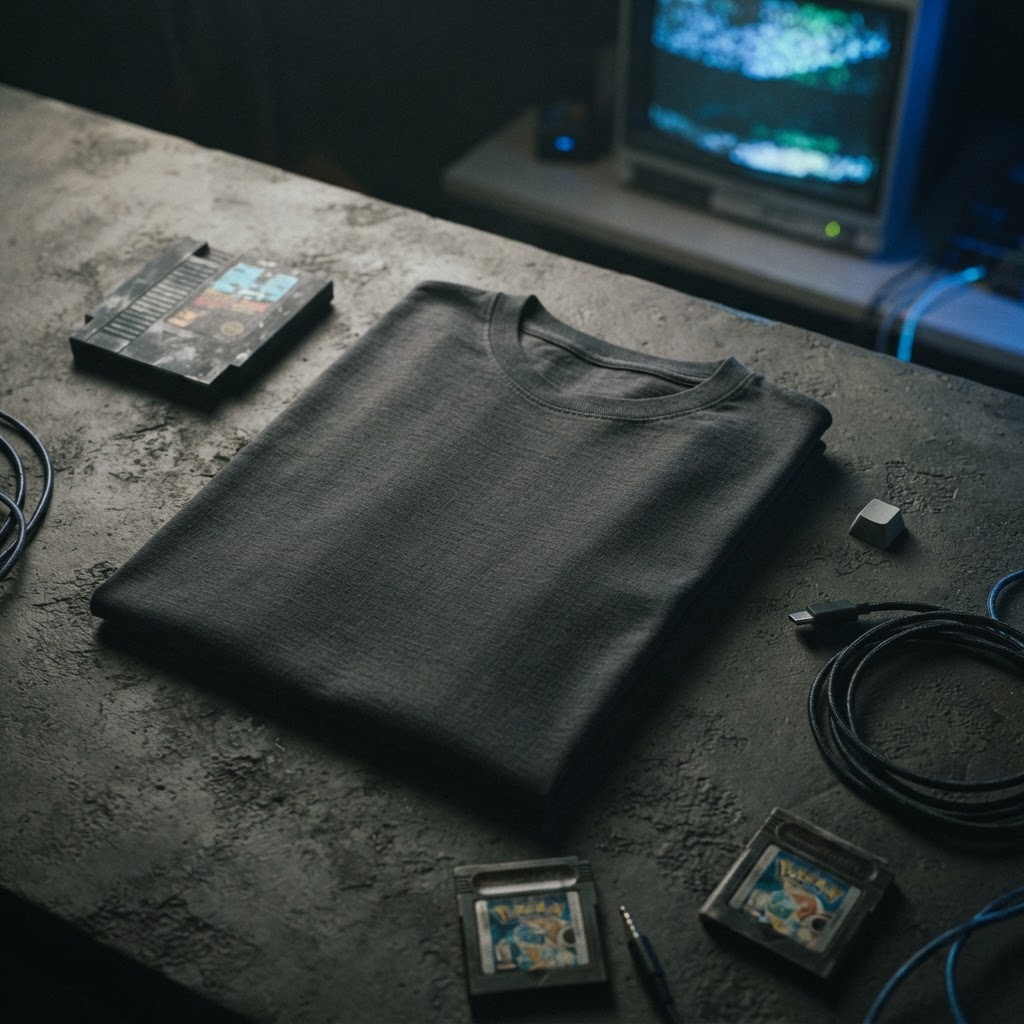
Extinct Era: When Extinction Becomes a Design Philosophy
What does an extinction-themed graphic t-shirt design mean in streetwear?
There's a particular tension that lives inside the word extinct. It's final. It's geological. It carries the weight of deep time — millions of years compressed into a single syllable. But it's also, quietly, one of the most charged words in contemporary culture. Species are vanishing. Eras are ending. Ways of living are disappearing before anyone thought to name them. The Extinct Era Tee from T49 sits right in that tension and doesn't blink.
This isn't a fossil print. It isn't a dinosaur tee aimed at nostalgia or a nature documentary dressed up in cotton. The Extinct Era design is something more deliberate than that — a graphic that asks you to sit with what it means to witness the end of something, and still choose to show up wearing it. That's a different kind of statement entirely.
The best graphic tees work like album covers used to: they compress a mood, a worldview, an era into a single image. Extinct Era does exactly that. It's a piece that rewards a second look — and a third.
The Visual Language of Disappearance
Designing around the concept of extinction is genuinely difficult to do without slipping into either sentimentality or shock. Go too soft and you've got a conservation poster. Go too hard and you've got something that looks lifted from a mid-2000s energy drink campaign. The Extinct Era graphic walks that line with precision.
The design pulls from the visual grammar of natural history — the kind you find pressed between the pages of scientific illustration, in museum display cases, in the meticulous linework of 19th-century naturalists cataloguing what they feared was already slipping away. There's a reverence embedded in that tradition. A seriousness. And when you bring that register into streetwear, the contrast creates friction in the best possible sense.
Friction is where interesting design lives. When something that belongs in a glass cabinet ends up screen-printed on cotton and worn down a high street, the meaning shifts. It becomes confrontational without trying to be. The mundane act of wearing a Tee suddenly carries geological weight.
Deep Time, Street Time
One of the quietly radical things about the Extinct Era concept is its relationship with scale. Extinction operates on timescales that human beings genuinely cannot hold in their heads. The asteroid that ended the Cretaceous period hit 66 million years ago. The passenger pigeon — one of the most recent and documented extinctions — was gone within decades of industrial hunting. Both are extinct. Both carry the same word.
Streetware as a culture has always been obsessed with time — specifically, with the moment. The drop. The release. The window before something sells out and becomes archive. There's an irony in that: a culture defined by urgency wearing a graphic rooted in permanence. Extinct Era leans into that irony rather than trying to resolve it.
In that sense, the design functions almost as a memento mori for the present. Not morbid — more like a reminder that things end, eras close, and there's a kind of dignity in acknowledging that rather than scrolling past it. Worn now, it means something specific to this moment. Ten years from now, it will mean something different. That's what good design does — it ages into new meanings.
Why Cotton Is the Right Canvas for This Concept
There's a material argument to be made for why this particular graphic belongs on a Tee and not on a gallery wall or a phone screen. Cotton has weight and warmth. It distresses over time. It absorbs wear. A graphic printed on a quality cotton tee becomes part of a living object — something that fades slightly at the edges, softens with washing, develops its own history on the body of the person wearing it.
For a design about extinction and the passing of eras, that material quality matters enormously. The Tee itself becomes a document of time. The more it's worn, the more the concept embeds itself in the fabric — not metaphorically, but literally. The threads carry it. That's not something a digital print or a fast-fashion polyester blank can offer.
T49's commitment to printing on quality cotton blanks isn't incidental to the design work — it's part of it. A graphic this considered deserves a canvas that will hold it properly. The texture of the cloth, the weight of the fabric, the way the print sits against the weave: all of it is part of how the final image is received. Extinct Era on a thin, cheap white tee would be a different object entirely. The cotton gives it gravity.
The Mood Board Nobody Showed You
If you were to reverse-engineer the cultural references embedded in Extinct Era, you'd end up somewhere interesting. There's a thread that runs from the diorama rooms of natural history museums — those hushed, dramatically lit spaces where taxidermied animals stand mid-motion in recreated habitats — through to the visual aesthetics of hardcore and post-punk record sleeves from the 1980s, where images of decay and natural imagery were used to articulate rage and grief simultaneously.
You'd find traces of the kind of scientific illustration that reached its peak in the Victorian era, when the natural world was being catalogued at the same speed it was being destroyed. You'd notice echoes of the dark romanticism that runs through contemporary Japanese streetwear — that willingness to sit with the beautiful and the terrible in the same frame, without needing to resolve the discomfort.
What doesn't appear in that mood board, conspicuously, is irony. Extinct Era is not a pastiche. It doesn't wink at the viewer or position itself as commentary-at-a-safe-distance. It commits to its concept fully, which is rarer than it should be in graphic design, and genuinely rare in streetwear, where self-awareness often substitutes for actual conviction.
Wearing the End of Something
There's a question worth asking about what it means, culturally, to choose a graphic like this right now. We're living through a period that historians will almost certainly characterise as a series of endings: ecological, political, technological. Entire industries, species, cultural forms, and ways of understanding the world are in the process of becoming extinct — some quickly, some slowly, most without adequate ceremony.
Streetswear has always been a form of cultural documentation. The logos, graphics, and references that people choose to put on their bodies form a visual archive of what mattered in a particular moment. In that context, the decision to wear something called Extinct Era is a choice to engage with that reality rather than dress around it. It's not nihilism. It's witness.
The design doesn't offer comfort. It doesn't promise that things will be okay or that what's lost can be recovered. What it offers instead is the slightly radical suggestion that acknowledging an ending is a form of respect — for what was there, for the scale of its absence, and for the world that continues regardless.
One Piece, One Era
Design spotlights work best when they reveal something you wouldn't have noticed otherwise — a layer of intention, a reference point, a material choice that reframes the whole object. With Extinct Era, the revelation is perhaps this: the concept isn't mournful, it's precise. It's a design that knows exactly what it's doing and refuses to soften that for accessibility.
That precision is what separates it from the crowded field of nature-inspired graphics that cycle endlessly through the mid-market. Where those designs borrow the aesthetic of the natural world for texture or visual interest, Extinct Era borrows its weight. The difference is everything.
Streetswear that lasts — the pieces that end up framed, archived, talked about — tends to be the kind that was rooted in something real when it was made. Not a trend, not a demographic exercise, but an actual idea. Extinct Era is an actual idea. And it looks good on cotton.
The Extinct Era Tee is available now at T49 — [see it here](/product/453753272). EXPLORE THE COLLECTION →