From Pavement to Permanent Collection: How Streetwear Became the Wardrobe
How did streetwear go from a subculture to everyday fashion?
There's a version of fashion history that runs in a clean line — from couture houses to high street, from runway to retail. Streetwear doesn't appear in that version. It arrived through a side door, ignored the script entirely, and somehow ended up owning the room.
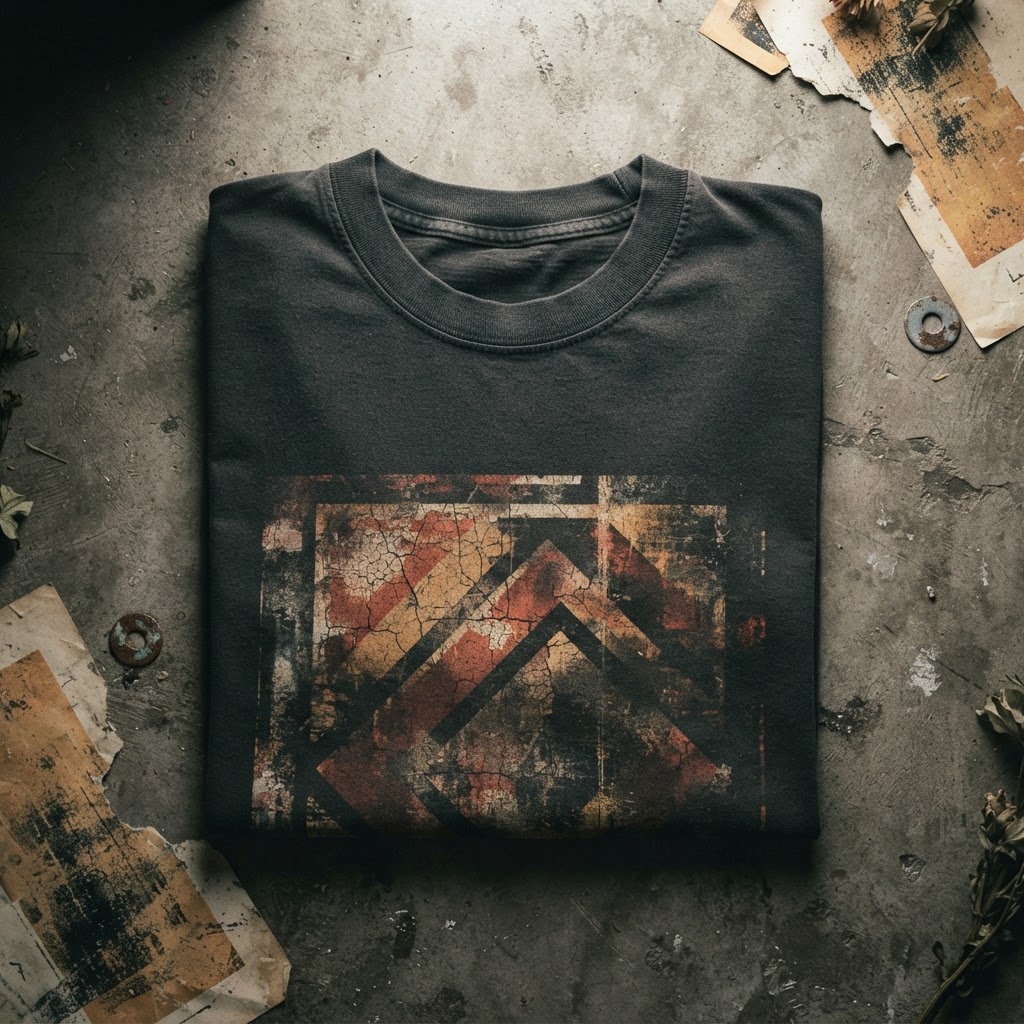
The journey from pavement to wardrobe wasn't a takeover. It was more of a slow, inevitable absorption — culture exerting pressure on commerce until the walls gave way. And at the centre of that pressure, more often than not, was a graphic tee. Not a suit, not a logo-embossed accessory. A printed cotton rectangle worn against the chest, broadcasting something without saying a word.
To understand how streetwear moved from margin to mainstream — and what it lost and kept along the way — you have to go back further than most trend pieces bother to.
The Graphic Tee as the Original Broadcast
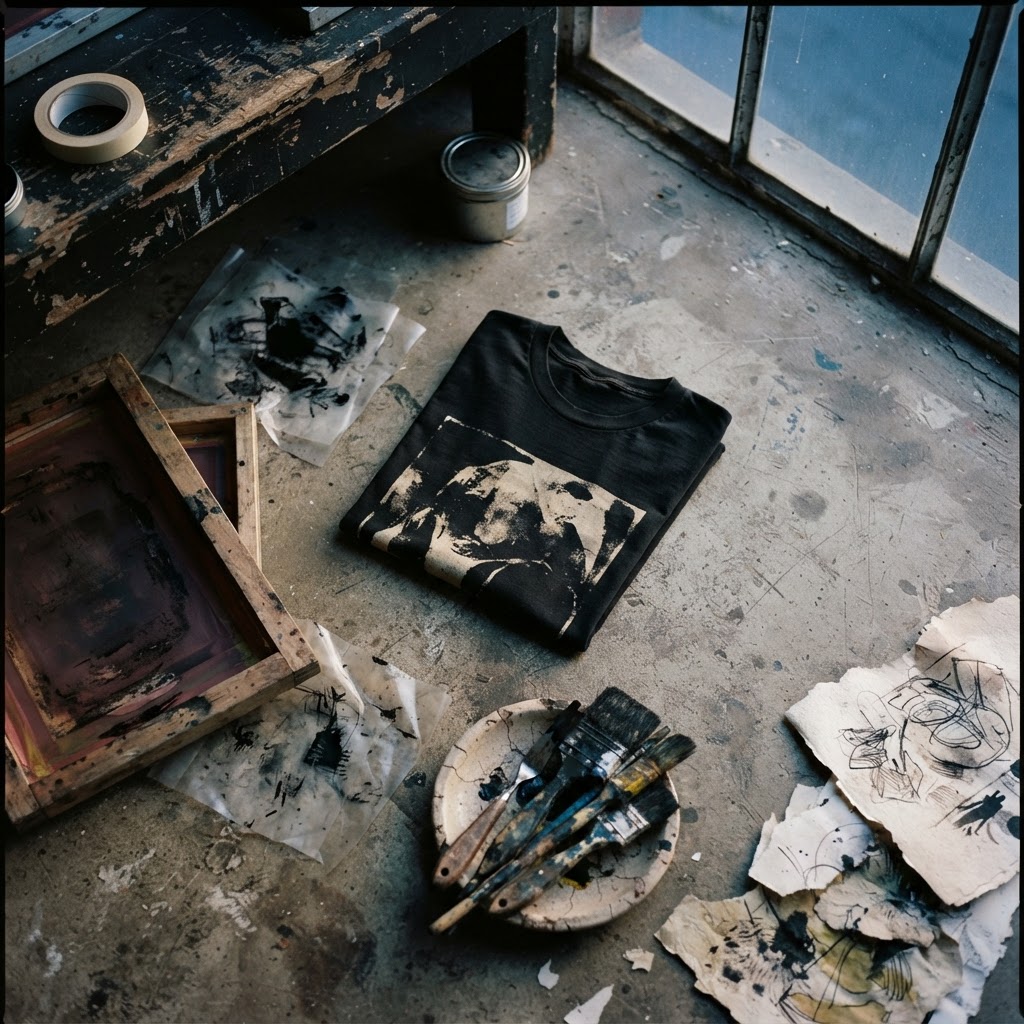
Before streetwear had a name, it had a format. The graphic tee was the first genuinely democratic medium for visual culture. You didn't need a gallery, a record deal, or a shop front. You needed a design, a screen, and something to print on.
In the 1970s and early 1980s, the printed tee operated as a form of broadcast for communities who had no access to mainstream channels. Skateparks, block parties, underground music scenes — these weren't just social spaces, they were visual ecosystems. The shirts people wore were shorthand for entire systems of belief, taste, and belonging. You could read a room by reading the chests.
What made the graphic tee so enduring wasn't the printing technology or the cotton weight — it was the fact that it asked something of its wearer. To put on a shirt with a strong image on it is an act of alignment. You're telling the world, without speaking: this is the frequency I'm on. That communicative weight is something no amount of trend cycling has been able to dilute.
The Underground Economy of Cool
Street culture in the late 1980s and through the 1990s ran on scarcity and specificity. Drops before drops were called drops. Limited runs that existed only because the machines were only so fast and the money only so available. The underground economy of cool operated on exactly the same principles that luxury brands would later try to manufacture artificially — but it wasn't manufactured. It was simply the reality of working outside the system.
Labels emerging from New York, Los Angeles, and Tokyo weren't positioning themselves against the mainstream. They were largely indifferent to it. The work was for the community. The aesthetic vocabulary drew from graffiti, from album art, from comic culture, from the particular visual grammar of streets that most fashion editors never walked down.
The irony — and it's a rich one — is that this indifference to mainstream approval was precisely what made the aesthetic so magnetic to the mainstream. When luxury fashion began absorbing streetwear references in the 2000s and then aggressively co-opting the whole language in the 2010s, it was chasing something it couldn't fully replicate: the authority that comes from genuine cultural rootedness.
When the Wardrobe Opened Its Doors
The tipping point is often dated to collaborations — Supreme and Louis Vuitton being the most cited — but the real shift happened earlier and more gradually. It happened when people who had grown up wearing graphic tees refused to stop when they got older, took office jobs, or found themselves in situations that previously demanded a different kind of dress code.
Streetswear's colonisation of the wardrobe wasn't a trend. It was generational. A cohort of people for whom a well-designed tee wasn't casual wear but primary wear carried that sensibility into every context they entered. Offices softened their dress codes. Restaurants dropped their jacket requirements. The graphic tee started appearing at openings, at dinners, at the kind of events that once required a collar.
This wasn't about dressing down. It was about dressing true. The idea that formal equated to serious and casual equated to lazy — a piece of class-coded clothing mythology — started losing its grip. What you wore became less about signalling status through convention and more about demonstrating taste through choice.
The Design Question
Once streetwear achieved cultural legitimacy, it faced the question that every mainstream moment forces on its sources: what do you keep, and what do you compromise?
The answer, for the best independent labels and designers, was clear: you keep the thinking. The design culture that drove streetwear at its best was never really about logomania or hype mechanics. It was about graphic design as communication — images that carried weight, references that rewarded attention, aesthetics built from real cultural material rather than trend forecasts.
A graphic tee that holds up over years — that you reach for repeatedly, that ages with you — usually has this quality. It's built around an image or a concept that has genuine depth. Something that works on a visual level immediately but reveals more with time. The difference between a tee you buy because it's available and a tee you keep because it means something is almost entirely a design question.
That's a distinction worth holding onto as the market has grown and the volume of printed cotton in the world has become almost incomprehensible. The flood of imagery hasn't cheapened the form — it's just made the good stuff easier to identify by contrast.
Music, Space, and the Image That Travels
Streetwear's relationship with music has always been one of its most generative threads. Not because music provides ready-made imagery to print — though it does — but because music and clothing share the same fundamental logic: they're both about how you move through the world and what you want that movement to feel like.
The DJ, specifically, holds a particular place in this lineage. Long before streaming algorithms, the DJ was the original curator — someone who understood that the power was in the selection and the sequencing, in knowing which record to play in which room at which moment. That aesthetic sensibility translated directly into how the best streetwear approached design: not just what to put on a shirt, but why that image, why now, why at all.
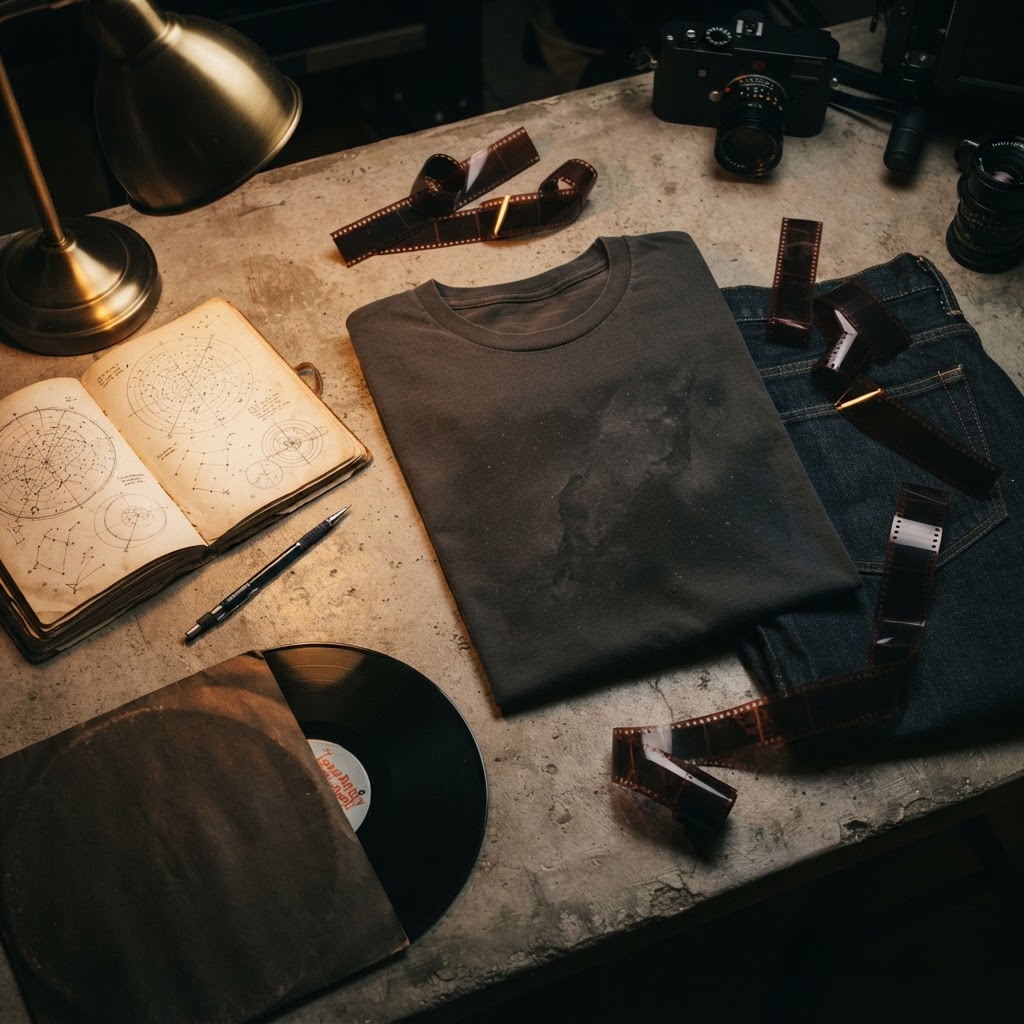
There's something in the idea of the DJ as a cosmic figure — someone navigating frequencies, moving between worlds, dissolving the boundary between the performer and the room — that maps onto how street culture itself has always operated. Fluid, responsive, able to read the energy and adjust. The image of a DJ against a galactic backdrop isn't just a cool visual. It's a diagram of how culture actually moves.
The DJ Galaxy Unisex t-shirt from T49 works in exactly this register — an image that's visually immediate but carries a layer of meaning about connectivity, frequency, and the space between sounds.
Where Streetwear Lives Now
The conversation about whether streetwear is 'dead' — a conversation that surfaces every few years with reliable predictability — misses the point entirely. Streetwear as a trend cycle may have peaked and receded. But streetwear as a mode of dressing, as a set of values about what clothing is for and who gets to decide, has become so embedded in contemporary wardrobes that it's no longer distinguishable as a separate category.
The graphic tee is now simply part of how people dress. Not a subcultural signifier, not a rebellious gesture — just a legitimate and sophisticated vehicle for visual culture. The street didn't lose when it went mainstream. It won, in the most complete way possible: by making its logic the default.
What that means for the designers and labels working at the sharp end is that the bar is higher, not lower. When the format is democratised, the only differentiator is the quality of thought behind the image. The tees that last — in wardrobes, in visual culture, in the longer memory of what streetwear was actually about — are the ones where someone sat down, looked hard at an idea, and found a way to make it live on cotton.
That work is still happening. It's just quieter than the hype cycle around it. And it always has been.
The DJ Galaxy Unisex t-shirt is available now at T49 — an image built around frequency, space, and the culture that moves between them: /product/453726342 EXPLORE THE COLLECTION →