One Tee, Two Lives: How to Wear a Graphic All Day Without Changing
Can you wear a graphic tee for a night out?
There's a particular kind of confidence that comes from wearing one thing all day and not needing to go home and change. Not laziness — intention. The graphic tee, done properly, is one of the few pieces in a wardrobe that can actually pull this off. Not because it's neutral. Because it has a point of view, and a point of view reads in any light.
The mistake most people make is treating a graphic tee as a daytime-only piece — something you dress down for and then swap out when the evening gets more serious. But that thinking gets it backwards. The graphic is the constant. The styling around it is what shifts. Once you understand that, the whole thing becomes much easier.
What follows isn't a formula. It's a way of thinking about the tee as the fixed point in an outfit, and everything else as adjustable — the levers you pull depending on the hour, the setting, the energy of the room.
Start With the Right Base
Not every graphic tee can do this. The ones that work from morning through to midnight share a few qualities: a considered print that holds interest without shouting, a fit that works in multiple contexts, and a fabric weight that doesn't collapse by 3pm.
Fit is the first filter. An oversized tee reads relaxed in the daytime but can start to feel sloppy by evening unless the rest of the outfit is doing structural work around it. A closer fit gives you more range — it can sit under an open overshirt at noon and stand alone under low light later. Neither is wrong, but you need to know which one you're working with before you build an outfit around it.
The print itself matters more than people admit. Something with genuine graphic weight — a strong composition, a defined image, a concept that rewards looking at — holds its own as an outfit anchor. A faded slogan or a logo-heavy chest hit tends to fade into the background. You want a tee that carries the outfit, not one that disappears inside it.
The Daytime Build: Keep the Frame Light
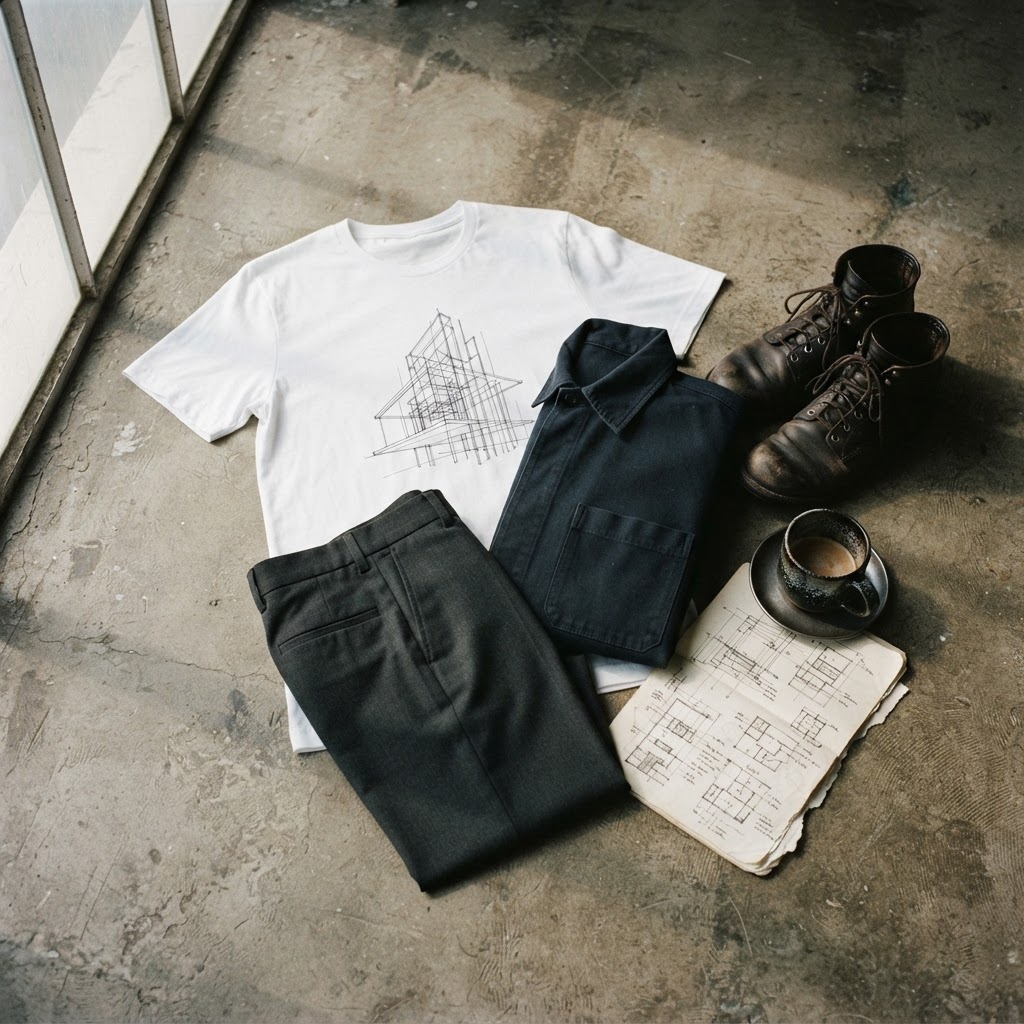
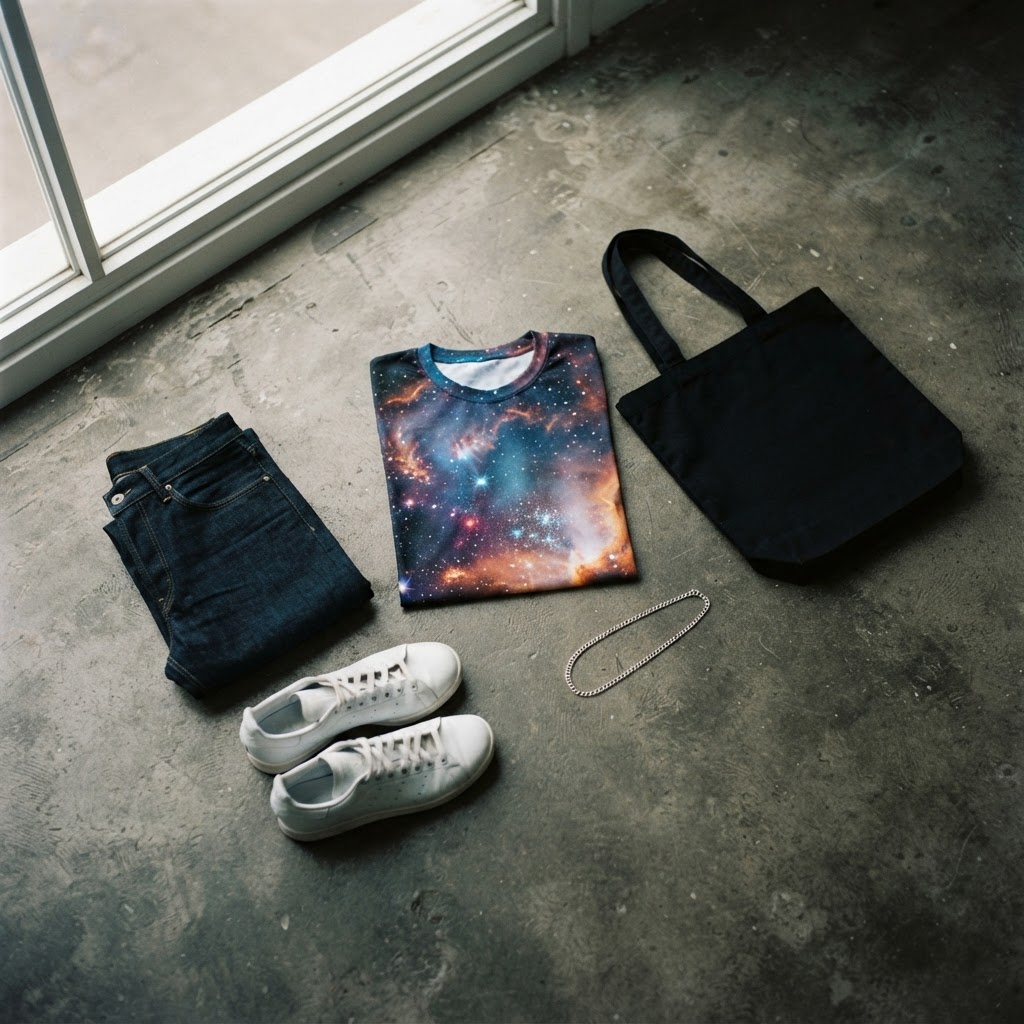
Morning into afternoon, the approach is straightforward: let the tee breathe. Pair it with something that echoes its energy without competing — wide-leg trousers in a washed or natural tone, relaxed denim with a little structure, cropped utility trousers if the proportions are right. The idea is to create a frame that makes the graphic the natural focal point without staging it.
Footwear at this stage should stay grounded. Clean runners, low-profile trainers, a slightly worn leather shoe if the tee has enough graphic muscle to hold it. Nothing too polished yet — save that for later.
Accessories work in the daytime as texture and context. A canvas tote, a cap worn back, a simple chain sitting at the collar. None of it should feel assembled. The best daytime graphic tee outfits look like they came together without effort, which is exactly why they take a few minutes of thought.
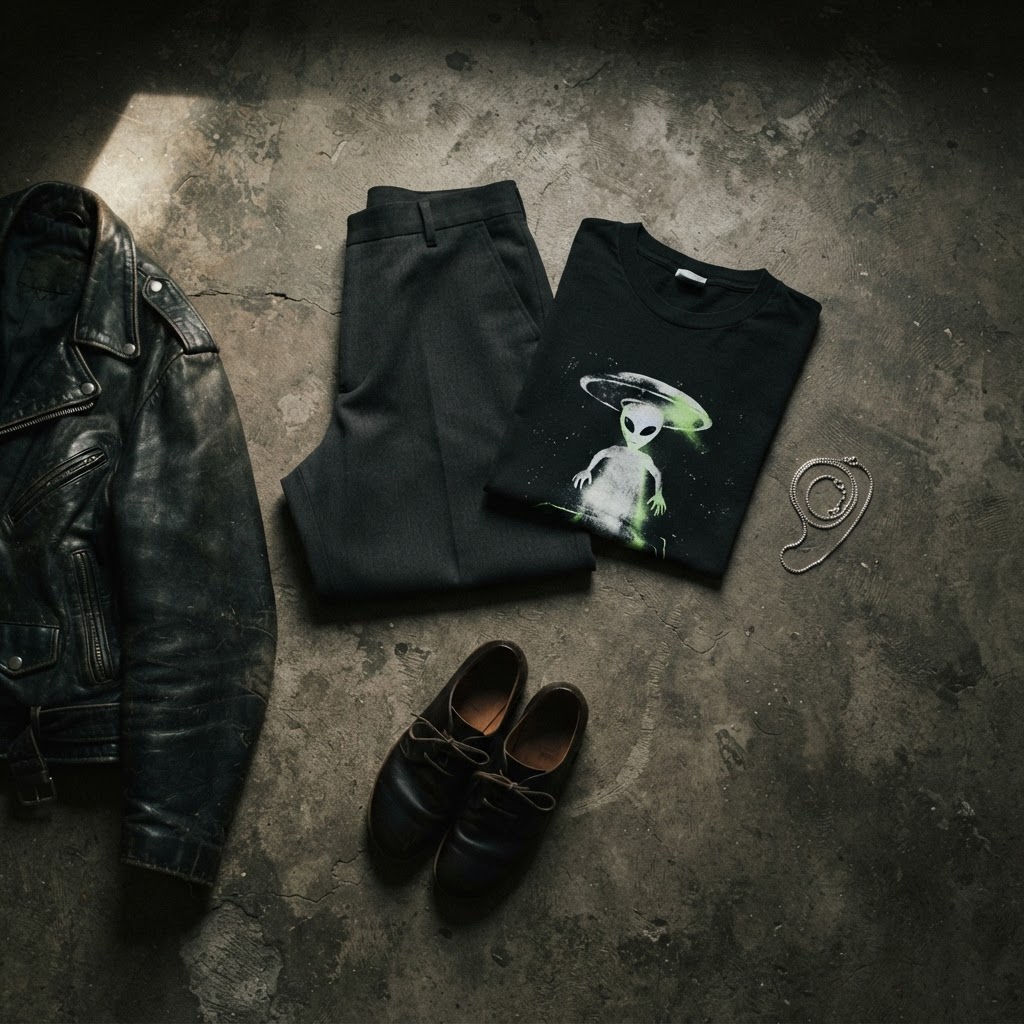
The Revenge Alien Tee works well here — its graphic has enough visual density to function as the lead piece without needing support, which is exactly the quality you're looking for in a piece you're going to be wearing for the next twelve hours.
The Transition: What to Add, What to Remove
The late afternoon shift — the point between day and evening where most outfits fall apart — is where the graphic tee actually earns its reputation. The move isn't to change; it's to adjust the weight of what's around it.
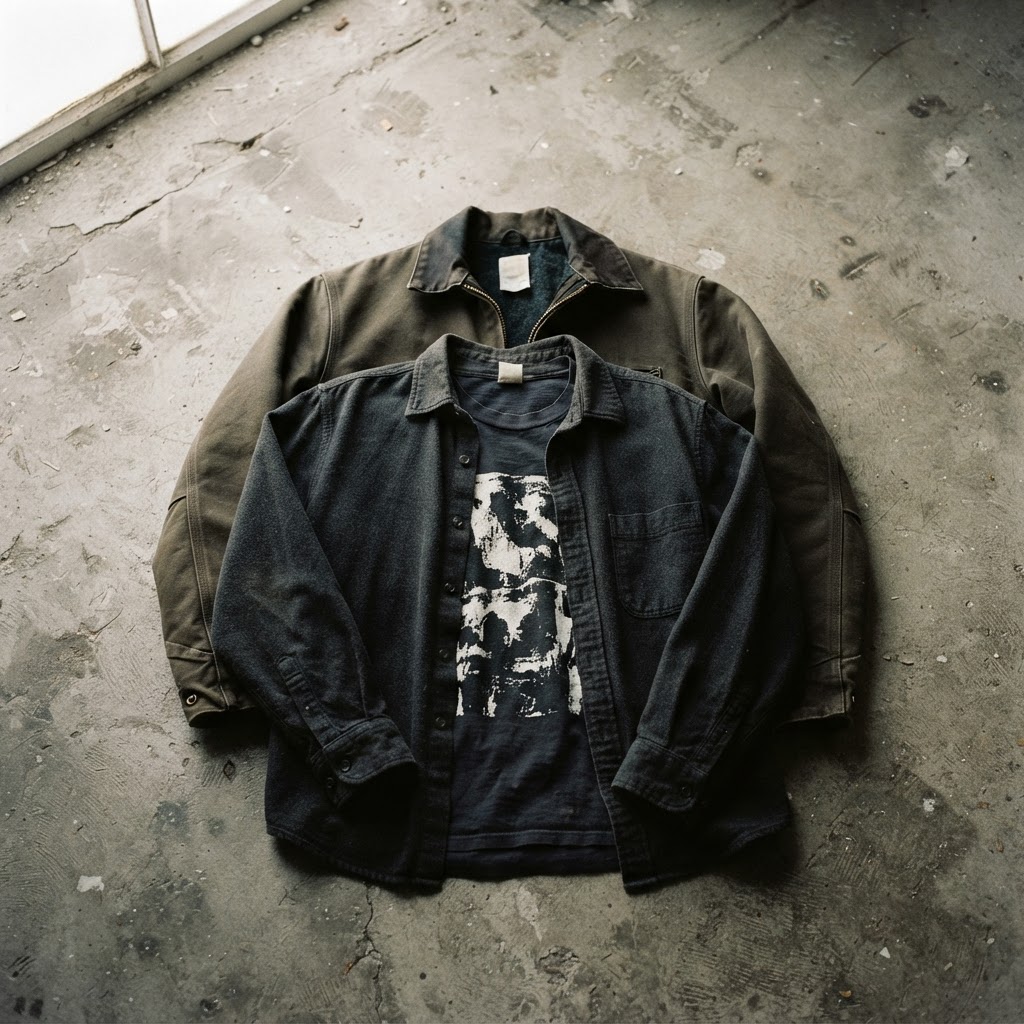
If you've been wearing an overshirt or a light jacket during the day, this is when you close it or swap it for something with a harder edge. A structured harrington, an unlined blazer worn loose, a leather jacket if the tee can hold the contrast. These additions don't soften the graphic — they frame it differently, giving it a slightly more deliberate quality that reads better in evening light and more considered settings.
Swap the footwear if you can. This is the single biggest shift you can make without touching the tee itself. Moving from a trainer to a leather boot or a clean low-profile shoe changes the register of the whole outfit by about three levels. The graphic stays the same but suddenly feels intentional in a different way — less casual, more chosen.
Trim the accessories back. The cap comes off. The tote gets left behind. A single clean watch or a slightly heavier chain is enough. The evening version of a graphic tee outfit is about reduction, not addition.
Reading the Room: How Much Contrast Is Right?
The real skill in day-to-night graphic tee dressing is understanding contrast — and knowing when to push it further and when to pull back.
High contrast works when the setting is informal or expressive: a basement bar, a gallery opening, somewhere that rewards looking like you know exactly what you're doing without trying to prove it. In these spaces, pairing a strong graphic tee with tailored wide-leg trousers and a sharp shoe creates a tension that reads well. The graphic does cultural work; the tailoring says it's deliberate.
Lower contrast works when the room is mixed — when you need to move between spaces that don't share an aesthetic. Here, keep the palette tight. Dark tee, dark trousers, dark footwear. Let the graphic carry all the personality while the silhouette stays quiet. This is stealth dressing — you're legible to people who are looking, invisible to people who aren't.
The trap to avoid is over-explaining the outfit. Every piece doesn't need to reinforce the tee's message. One strong graphic, one considered silhouette, and the right shoe is enough. Anything more and you're not dressing — you're presenting.
Proportion and the Tuck Question
The tuck — partial, full, or none — changes the character of a graphic tee outfit more dramatically than almost any other single decision. It's also the most overthought.
Full tuck is rarely right unless the tee has a very short body and you're pairing it with high-waisted trousers. It tends to compress the graphic, pulling it into the waistband where it loses definition. Partial tuck — a single front corner, casual, slightly thrown — works in the daytime and can carry into evening depending on the trouser. No tuck is the default, but it rewards some thought about where the hem falls relative to the trouser rise.
Oversized graphics — the kind that run to the hem or extend across the full chest — generally want to be untucked. The print is designed to be read across its full dimension. Tuck it and you're editing the artwork, which is almost never the right call.
Length matters here too. A tee that hits at the hip gives you options. One that hits at mid-thigh is harder to work with in an evening context and commits you more firmly to the oversized, relaxed lane — which is fine, but it limits your range as the day shifts.
The Midnight Version: When the Tee Becomes the Whole Outfit
By late evening, something interesting happens to a graphic tee outfit that's been worn and moved through the day. It develops a kind of worn-in authority. The graphic has been looked at. The fit has settled. You've stopped thinking about it, which is the point at which an outfit actually starts working.
Late night, the layers tend to come off — or they change. A leather jacket that felt sharp at 9pm gets draped over a shoulder or left at the coat check. What's left is the tee, the trousers, the shoes. And if you started with the right graphic, that's genuinely enough.
The tees that survive to midnight and still look considered are the ones where the design does real work — where the image has a quality that holds interest without demanding attention. That's the difference between a piece that was loud and a piece that was good. Loud fades. Good keeps going.
That's the whole argument for taking the graphic tee seriously across a full day. Not as a compromise or a starting point, but as the thing the outfit is built to carry.
The Revenge Alien Tee — a strong graphic with the visual weight to anchor an outfit all day — is available now at T49. /product/460300875 EXPLORE THE COLLECTION →