How to Layer a Graphic Tee When the Temperature Drops
How do you layer a graphic tee in winter without hiding the print?
There's a particular kind of defeat that happens every October. The temperature dips, the layers go on, and somewhere underneath a chunky knit or a padded overshirt, a genuinely good graphic tee disappears for five months. It doesn't have to be this way.
Layering isn't the enemy of graphic tees — lazy layering is. The difference is thinking about proportion, contrast, and how much of the graphic you actually need to see for the fit to land. Sometimes a full reveal isn't the point. Sometimes a cropped flash of print at the hem, or a single sleeve poking out from under an open jacket, does more work than showing the whole thing. Winter dressing, done right, can actually make a strong tee more interesting — not less.
This is a guide for people who don't want to put their tees in cold storage. It's about building real fits that function in real temperatures, without sacrificing the reason you bought the tee in the first place.
The Open Layer: Your Most Useful Tool
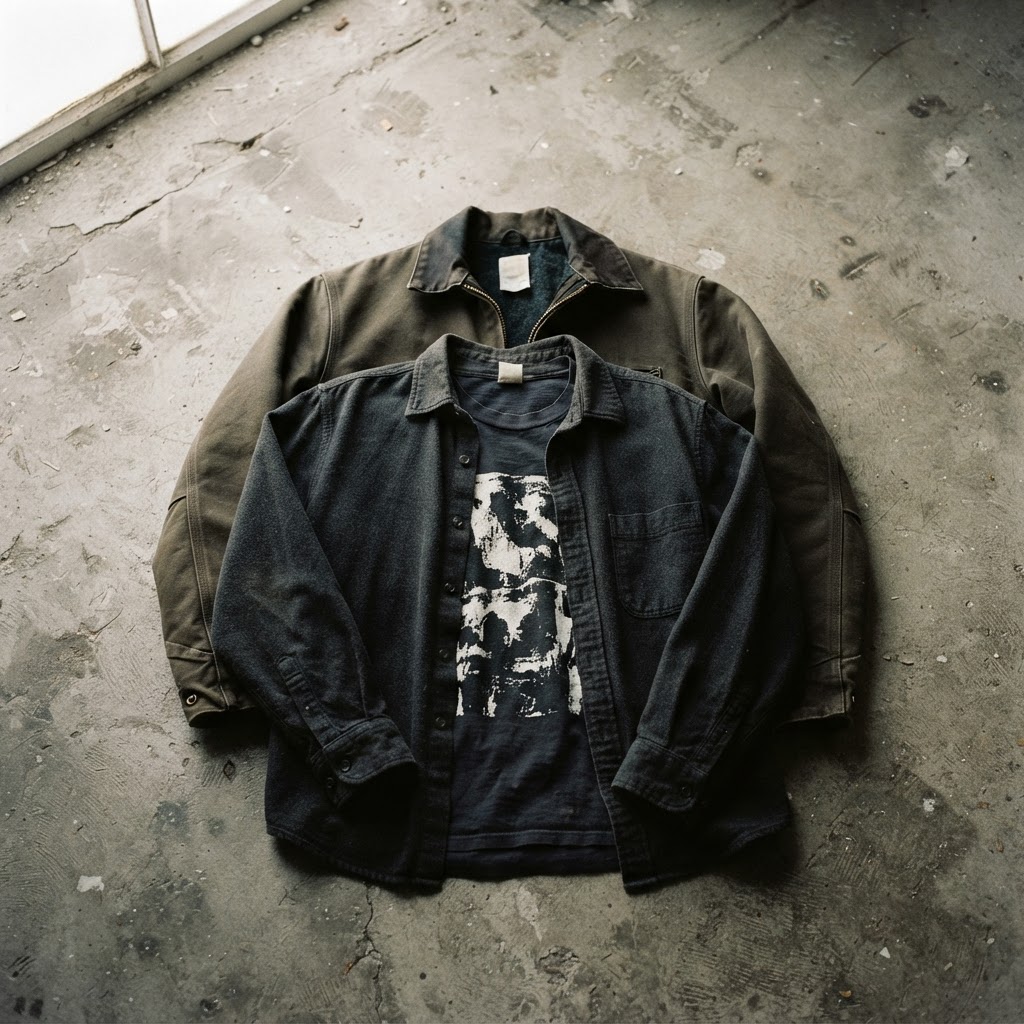
If you're going to learn one layering move and apply it consistently, make it this one. An open overshirt, flannel, or lightweight jacket worn unbuttoned over a graphic tee is the most reliable way to keep the print visible while adding warmth and structure.
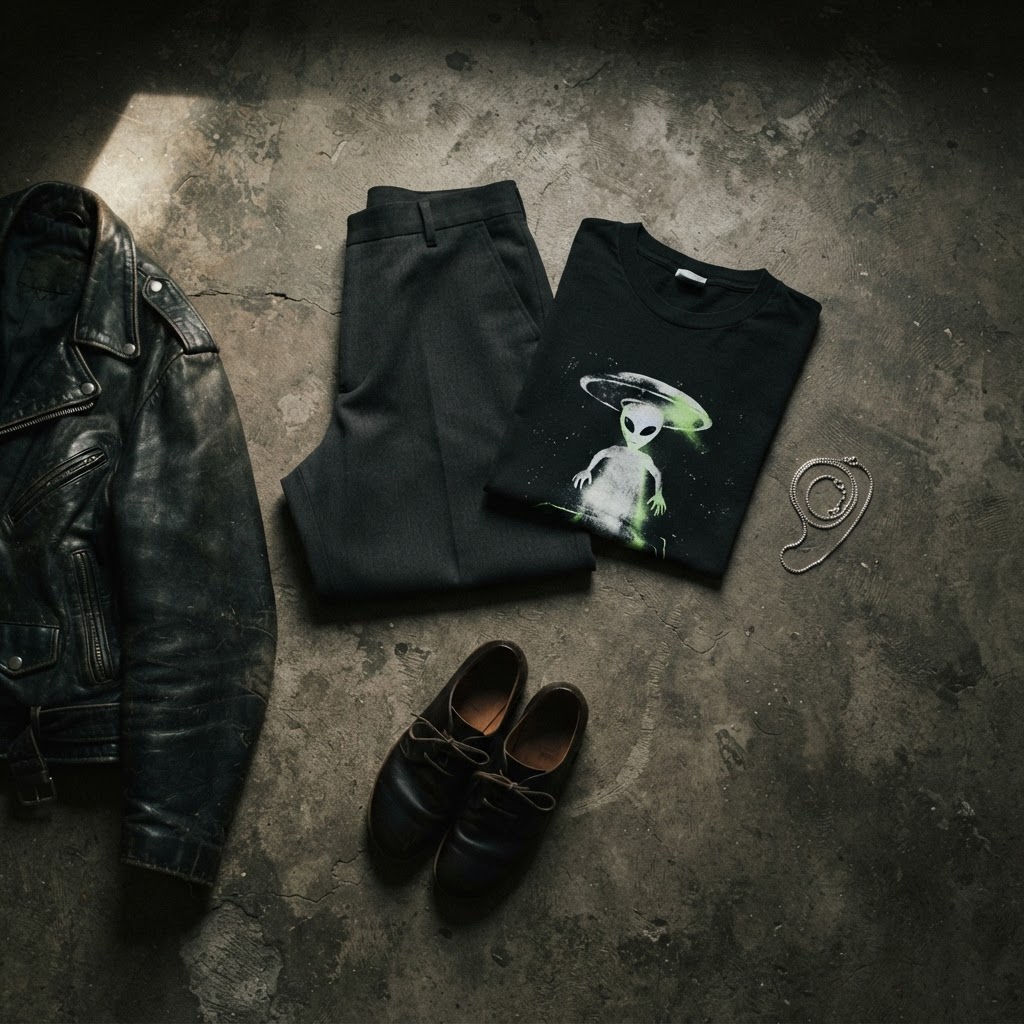
The key is proportion. If the tee has a large central graphic — a bold character illustration, a full-chest print — you want the overshirt to frame it rather than compete with it. That means reaching for solid colours or low-contrast patterns on top. A washed black flannel over a high-contrast print. A stone overshirt over something with a dark ground. Let the tee be the visual event; the layer above it is just architecture.
Fit matters here too. An overshirt that's too boxy will swallow the tee underneath and make the whole silhouette read as bulk. Something with a bit of structure at the shoulder, or a slightly fitted chest, keeps the layers readable as separate pieces rather than one shapeless mass.
Under the Knit: The Collar-and-Hem Game
Wearing a tee underneath a crewneck or heavyweight knit sounds counterintuitive — you're covering it entirely. But this technique has a long history in workwear and prep-adjacent dressing, and it works for graphic tees in a specific way: it's about the suggestion of what's underneath, not full visibility.
A graphic tee collar peeking above a crewneck knit immediately signals that there's something deliberate happening underneath. It breaks the blankness of the knit. If the tee is long enough to drop below the hem of the knit — especially with a slightly cropped sweater — you get a second visual moment at the bottom. The graphic becomes a rumour, a detail, something the viewer fills in.
The tees that work best for this treatment are ones with strong typography or a print that reads well even in fragments. A sleeve graphic, a hem print, a neckline detail — anything that survives being partially obscured. Bold concept designs with character illustration or strong linework tend to hold up well in this context, because even a sliver of the composition suggests the whole.
The Structured Layer: Tailoring Isn't the Enemy
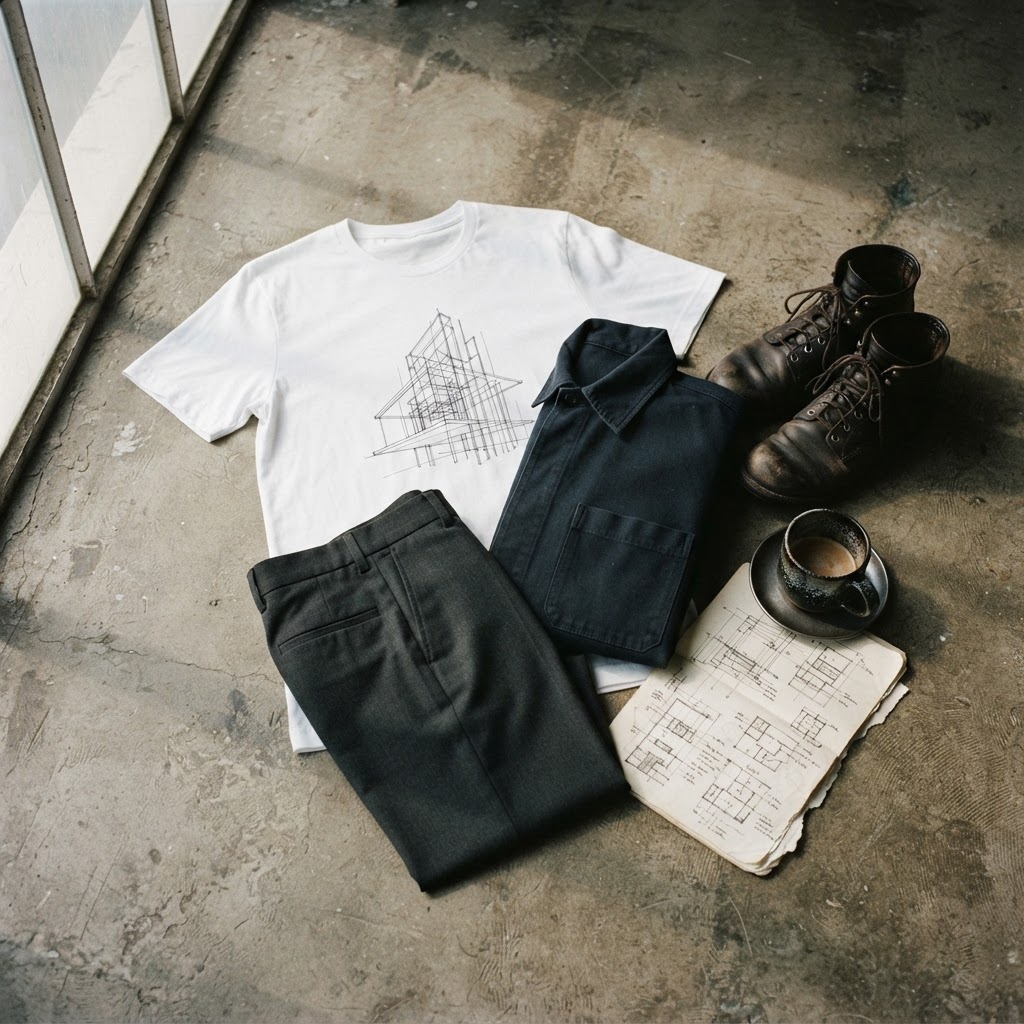
Streetswear's relationship with tailoring has never been more relaxed than it is now, which means there's genuine room to put a graphic tee to work under a blazer or structured coat without it reading as a costume or an attempt at irony.
The move here is contrast of register. A tailored piece — a dark suit jacket, a long overcoat, a structured wool blazer — worn over a graphic tee creates a productive tension that neither piece could generate alone. The tailoring gets loosened up; the tee gets elevated in context without losing its edge. Neither thing wins. That's the point.
For winter specifically, a heavy overcoat over a graphic tee with straight-leg trousers and chunky boots is a complete fit that works across most temperatures. The tee is visible at the collar, the cuffs if the coat sleeves are pushed back, and at the hem if the coat is open. That's enough. You don't need the whole print on show to make it land — the glimpse does the work.
The Baby Driver Tee — a clean, cinematic design with strong graphic energy — works particularly well in this context. The composition has enough presence to read even in partial visibility, which is exactly what structured layering demands.
Cold Temperatures: Going Heavyweight and Under
When it's actually cold — not autumn-cold, but proper winter — the tee moves to a base or mid-layer role, and the approach changes. Now you're thinking about heat retention and how the fit reads as a whole system, not just whether the print is visible.
A quality heavyweight cotton tee under a zip-through hoodie, under a shell or padded jacket, creates a layering stack that actually performs. The graphic tee isn't the star of this outfit — it's infrastructure. And that's fine. Not every fit needs to foreground the print. Sometimes you're just building a warm, considered outfit where the tee is one component.
Where the tee still shows up is in the details: hood down with the collar of the tee visible, jacket unzipped to reveal the hoodie, hoodie partly unzipped to flash the graphic underneath. Urban dressing in winter is about managing these reveals deliberately. A good graphic tee worn this way becomes almost architectural — it's a layer in a system, not a floating standalone piece.
When you do get inside, the jacket comes off, then the hoodie, and suddenly the tee is doing its full job again. Layering for winter means thinking about the on-and-off cycle as much as the static look.
Colour, Contrast, and What Actually Works
Winter palettes tend toward the dark, the muted, and the earthy — which is good news for graphic tees that have strong contrast or a bold ground colour. A black tee with a detailed illustration looks at home in a December fit in a way it might struggle with in August.
The pitfall is layering too many dark elements without any variation in texture or tone. A black tee under a black flannel under a charcoal coat is technically monochrome but in practice just reads as flat. The solution is texture contrast: a rough woven overshirt against a smooth cotton tee, a matte canvas jacket against a slightly sheen-finished print, ribbed knitwear against flat jersey.
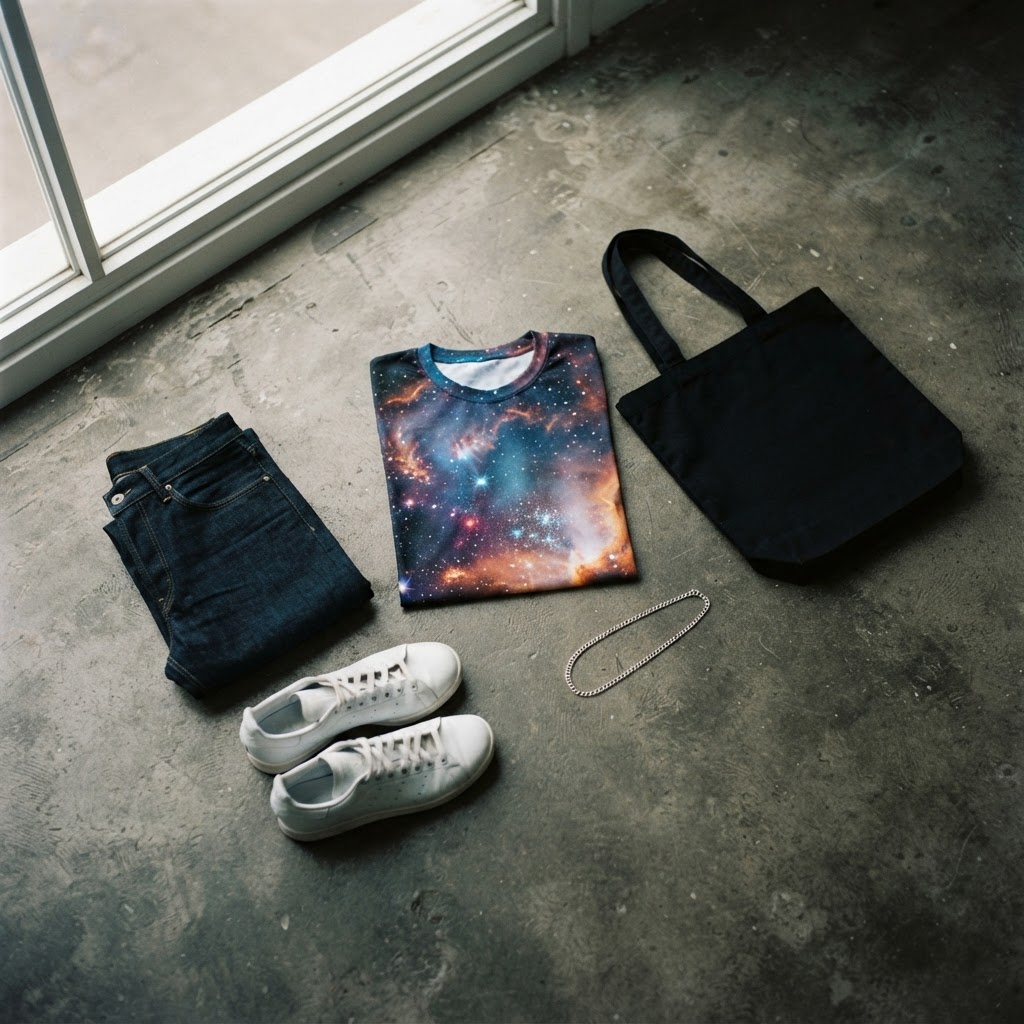
Light-ground graphic tees — white or pale grey — need a bit more care in winter layering because they can look cold and unintentional against heavy outerwear. The fix is usually warmth elsewhere in the fit: tan boots, brown accessories, a camel or rust overshirt. Give the eye something warm to land on and the light tee stops looking like it wandered in from a summer wardrobe.
The Long Game: Building Fits That Work All Season
The most useful thing you can do for your winter wardrobe as someone who cares about graphic tees is invest in a handful of layering pieces that are specifically chosen to work with bold prints. Not to compete with them. Not to cover them. To frame them.
That means: a couple of open overshirts in solid, low-saturation colours. A structured knit or two in neutral tones. A heavyweight outer layer — jacket or coat — that has enough presence to stand up to a strong graphic without swallowing it. And at least one tailored piece you're comfortable wearing casually, because the graphic-under-blazer combination is one of the most reliable fits in the winter streetwear toolkit.
Graphic tees aren't seasonal. They're year-round pieces that require a bit more thinking in the colder months — but that thinking is exactly what separates a considered wardrobe from a reactive one. The temperature dropped. The tees stayed on.
The Baby Driver Tee is available now in the T49 collection — a strong cinematic graphic that holds its own under open layers or structured outerwear. [Shop it here.](/product/471786312) EXPLORE THE COLLECTION →